How Improperly Graded Driveways Accelerate Garage Sill Plate Rot
How Improperly Graded Driveways Accelerate Garage Sill Plate Rot
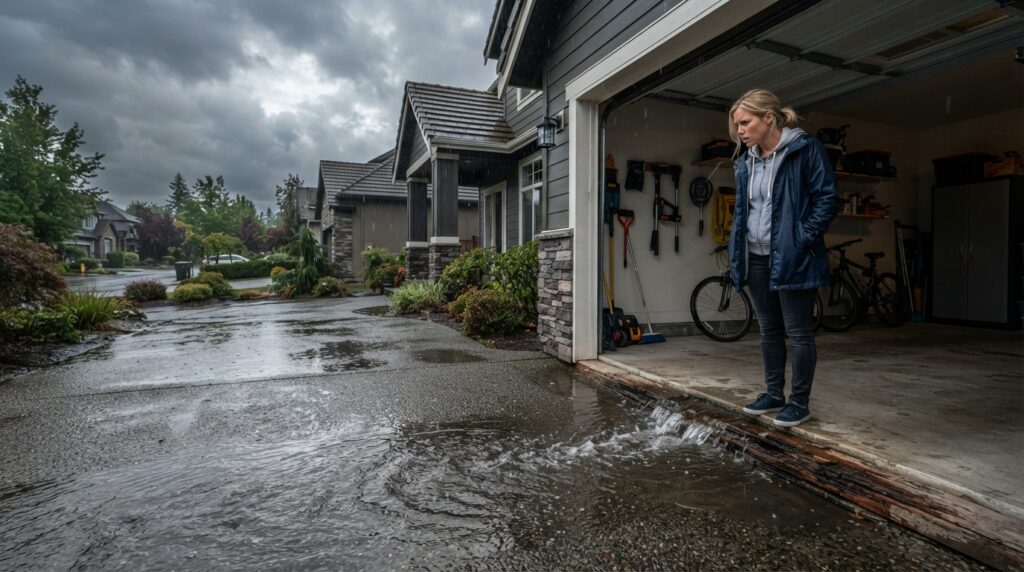
A well-constructed driveway does much more than offer a smooth surface for automobiles. The slope and drainage qualities are important for safeguarding the next garage from damage due to dampness. If a driveway is not properly graded, rainwater and melting snow can run toward the garage, rather than away from it, and water can pool along the base of the structure. This repetitive exposure can cause an accelerated deterioration of the garage sill plate over time . This plate is the wooden foundation member that connects the wall framing to the concrete slab or foundation . Because the sill plate is commonly hidden by wall finishes and outside cladding, rot can spread for years before structural signs become obvious. When homeowners learn that poor driveway grading causes constant dampness, they may notice the early warning signs, enhance drainage, and prevent costly structural damage to the garage and the foundation surrounding it.
Understanding Garage Sill Plate Role
The garage sill plate is the lowest horizontal framing part in the wall assembly, and sits directly on the concrete foundation or slab. It supports the structural loads from the wall above and provides a strong anchor for the entire framing system. Because it resists moisture better than untreated wood, pressure-treated timber is often utilized. However, even treated wood will deteriorate when exposed to water over lengthy periods of time. When moisture is constantly pooling around the garage’s foundation, the sill plates can get wet for long periods of time. This provides ideal circumstances for fungus to thrive and the wood to rot away over time. This structural component needs to be protected to ensure the garage is stable in the long run.
Why Driveway Grading Is Important
The grade of your driveway will decide which way surface water runs off when it rains or snow melts. A well graded driveway flows water away from the garage entry and surrounding foundation, decreasing the chances of moisture pooling near structural components. The problems occur if the driveway slopes toward the garage or has low spots where water pools. Even a minor down slope in a strong storm might direct a great deal of runoff toward the garage. The lower wall assembly is repeatedly wetted, experiencing dampness well beyond that for which typical construction materials are designed to handle, slowly working towards breakdown below the surface.
How water gets to the sill plate
Water often pools where the driveway meets the garage floor or foundation wall from runoff that regularly flows into the garage. Moisture can seep into hidden locations through small openings below weather seals, expansion joints or exterior sheathing. Concrete is a porous material, it is capable of absorbing water, and then gently discharging moisture to surrounding wood structure through contact. Rainwater splashing across the lower wall surfaces also increases moisture exposure around the sill plate. Repeated wetness inhibits the wood from drying out, and allows decay organisms to become established within the structural framing.
How Wood Decays
Wood rot occurs when fungus start breaking down the natural fibers in wet wood. Decay can only happen if the wood is damp enough for long enough, and the temperature is right for biological activity. Once established under these conditions, fungal growth gradually compromises the structural integrity of the sill plate by eating cellulose and other organic constituents. The first signs of decay may be merely a small softness or discoloration, but as moisture continues to soak into the wood, the damage goes deeper into the wood. As time passes, the afflicted sill plate will no longer be able to carry the structural loads adequately, increasing the danger of wall movement and further damage to the framing.
Identifying the Early Warning Signs
The first indicators of sill plate deterioration are usually seen on the outside of the garage before any serious structural damage appears. One of the most apparent symptoms of incorrect driveway grading is water gathering near the garage entrance after rains. Peeling paint, stains or discoloration along the lower areas of exterior walls may also be seen. In a garage, musty smells, wet floors along the walls or isolated mold development might be indications of concealed moisture build-up. More advanced cases show doors becoming increasingly difficult to close correctly as framing continues to move away from decreasing structural support. Catching these warning signals early enough lets you solve drainage problems before you have to do substantial repairs.
Diagnosing Moisture Related Structural Damage
Proper diagnosis entails examining the driveway drainage pattern and garage structural condition. Watch the driveway during or right after a rain to see if water is flowing toward the building or away from it. Moisture meters can assist identify high moisture levels within lower wall frame and sill plates without much disruption. Soft regions, which indicate early degradation, may be revealed by instruments used to examine exposed wood. By looking at the foundation joints, garage door thresholds, and the way the ground slopes around the building, you can get clues as to how water is getting into the structure. Before any repairs are made, a thorough investigation has to be completed to correctly determine the source of the moisture and the structural damage caused by it.
Fixing the Cause Before the Damage
Often the sill plates are not replaced when the driveway drainage is corrected and the moisture problems return. The first step in effective repairs is to correct the driveway slope so that runoff will drain away from the garage. In some cases trench drains, channel drains or other surface drainage systems are installed to give further protection from water build-up. Replace any damaged sill plates with proper pressure-treated lumber and repair any surrounding framing that has been compromised by rot. In addition, sealing the holes at the garage threshold and keeping up effective exterior waterproofing will help to further limit moisture ingress. Drainage problem and structural damage fix is a permanent fix not a band aid. The remedy has to be addressed together.
Future Sill Plate Rot Minimization
To provide long-term protection, efficient drainage surrounding the garage must be maintained throughout the year. Routinely check driveways for settling, cracks or low places, as these might be signs of future drainage problems that cause water to pond around the structure. Maintenance of gutters and downspouts minimizes roof runoff from contributing to moisture at the foundation. Landscaping should also direct water away from the garage, not towards it. Check the garage threshold, weather seals and lower wall structure periodically for moisture entry before it becomes a severe rotting issue. By understanding how a poorly graded road contributes to the accelerated deterioration of the garage sill plate, the homeowner can take preventive maintenance measures to protect the structural integrity, improve drainage and extend the life of the garage framing and the adjacent foundation.