Why Electric Clothes Dryers Run Full Cycles Without Producing Heat Despite Intact Heating Elements
Why Electric Clothes Dryers Run Full Cycles Without Producing Heat Despite Intact Heating Elements
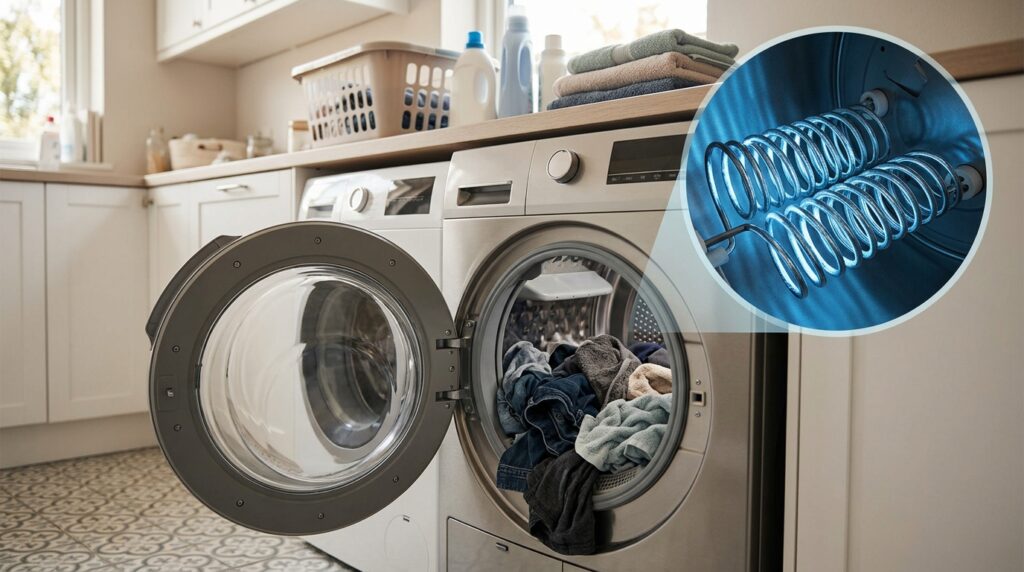
Few appliance problems are as mystifying as an electric dryer that tumbles clothing through a complete cycle, then ends with a happy bell and leaves everything cold and damp. So the drum turns, the lights operate, the timer counts down and the heating element tests just OK with a multimeter. So it seems nothing is wrong. But the missing heat is a clear clue that something else in the heating circuit is cutting power or shutting off the element. An electric clothes dryer contains two electrical systems: one for the motor and controls, and the other for the high-power heater. A problem in the power supply, a safety device, a sensor or a relay might shut the heat without disabling the drum at all. Many a homeowner replaces an excellent element, and still their laundry is damp. This article describes how the heating circuit works, and discusses the most prevalent hidden causes, so you can diagnose the problem correctly before buying parts or booking a repair.
How Electric Dryers Make and Regulate Heat
An electric dryer has a coiled resistance element within a metal duct next to the drum to heat the air. A blower takes room air through the hot coil and pushes it through the tumbling garments and blows the humid air outside. commonly the heater is rated at about 5,000 watts and is powered by a 240 volt supply. The motor, timer and control panel are commonly powered at 120 volts taken from one leg of that supply. Power can only get to the element after going via a chain of components which include the door switch, the start switch, the thermal fuse, the high-limit thermostat, the cycling thermostat and the heating relay or control board. If any link in that chain breaks the element stays cold. That is why an intact element is only part of the puzzle and why technicians trace the circuit step-by-step instead of replacing pieces by guesswork .
Why a spinning drum doesn’t mean the heating circuit is working
You’d think when the dryer tumbles it would be getting full power but the two functions are electrically independent. The motor, drum light and display need only 120 volts and will operate normally even if the 240 volt heating circuit is not complete. Many dryers also run a full cycle after a safety feature has removed the heat, because manufacturers build the machine to keep tumbling rather than stop abruptly. That’s why owners so often say that everything is normal except the warmth. A continuity test on the heating element just proves that the coil is not broken, not if voltage really gets to it in the course of a cycle. A more important point is, when heat is required, is power at the element terminals a measurement best left to someone knowledgeable in live electrical testing.
Voltage drop on 1 leg of 240-volt supply
One of the most prevalent concealed causes is outside the dryer altogether. The heating element needs both hot legs of a 240 volt circuit to provide full heat. If one leg is lost the motor and controls (which run on 120 volts only) work fine but the element gets hardly little power. It occurs when one side of a double-pole breaker trips and the other remains on, when a fuse in an old panel breaks, or when a connection at the breaker, outlet or terminal block within the dryer becomes loose and burns. Signs include a discolored plug, a heated outlet or a faint burning smell from the cord. A simple first step is to turn the breaker off all the way and then back on again. If you notice any scorching or melted plastic on the cord or receptacle, replace it before using the dryer again.
Disengaged High-Limit Thermostats and Burned Out Thermal Fuses
Dryers have safety devices that open the heating circuit if the temperature gets too high. A thermal fuse is a one-time use part that is typically located on the blower housing or exhaust duct and burns out permanently at a preset temperature, usually about 250 degrees Fahrenheit. The high-limit thermostat, which may be a separate part or incorporated into the heater housing, trips at a higher temperature and may reset on cooling or fail open. If one of the devices opens up , the element is no longer powered , but the drum is still spinning . This causes exactly the condition described above . Both are cheap and straightforward to test for continuity once the dryer has been unplugged . A blown thermal fuse will have no continuity at all . But these sections do not often fail without reason. A blown fuse means the dryer over heated . Just putting a new fuse in and not finding out why it over heated frequently results in the same failure again .
Restricted Venting: The Hidden Root Cause
Restricted exhaust airflow is the most prevalent cause of safety devices tripping in the first place. Crushed or too-long flex ducts, sharp bends and plugged wall caps make the limitation worse, yet lint builds up inside the vent duct, the outside hood and the lint-trap housing. If the hot, moist air is not allowed to escape from the machine, the temperature in the heater housing will increase rapidly, causing a thermal fuse or high-limits thermostat to open to prevent harm. Warning indications are garments that take two or more cycles to dry, a heated laundry room, a musty smell and an exterior vent flap that hardly moves while the dryer is running. One simple test is to remove the duct from the back of the machine and check the air flow at the exit. Cleaning the whole duct run, as well as replacing foil or vinyl hose with rigid metal duct, helps protect performance and safety. Lint buildup is a leading cause of dryer fires.
Moisture Sensors & Thermistors & Cycling Thermostats Poor
The dryer has temperature and moisture control sections between the safety devices and the element to control the heat during normal operation. The cycling thermostat cycles the heater on and off to maintain a constant drum temperature . If the contacts of the thermostat get pitted or stuck open , the element will never receive electricity . Many modern models utilize a thermistor instead of the mechanical thermostat. A thermistor is a small sensor that has a resistance that varies with temperature. The control board reads the thermistor and uses that information to determine when to ignite the heater. A bad thermistor can give incorrect readings that make the board think the dryer is already hot. Also, fabric softener residue can coat the moisture sensor bars inside the drum that detect dampness in the garments, which can cause the heating phase to stop prematurely. The bars can be easily wiped with rubbing alcohol, however checking a thermostat or thermistor requires a multimeter and the resistance values given in the service manual.
Wiring, Relay & Control Board Problems
If all of the thermal parts check out good then you need to check the parts that control the heat. The high current heater circuit in electronic dryers is switched from the main control board by relays . Over time , the relay contacts might burn or weld from repetitive use . If a relay has failed it may allow the drum to work as normal but no power is being sent to the element. Some types include a separate heater relay or sensor board close to the heater housing and those parts wear out too. Selector switches, start switches and timer contacts of older mechanical dryers also fail. The wiring problems add to the confusion, because vibration and heat gradually work the terminals loose and destroy the insulation, creating intermittent connections that break only when the heater draws maximum current. Strong clues are burn marks visible on the board or a clicking relay that has no heat. Because control boards are expensive, check all other possibilities first.
Long term safe diagnostic procedures and prevention
Safety first, thus always disconnect the dryer and if possible turn off the breaker before opening any panel. Check the simple things first: Are both breaker poles on? Check the outlet and cord. Clean the lint screen and test airflow at the vent. Next, open the cabinet and test for continuity the thermal fuse, high-limit thermostat, and cycling thermostat, and look for burn marks at the terminal block. If they all check out, then the likely culprit is a sensor, relay or board, and a tech with live-testing instruments is the safest bet. Also, when you replace a safety item, clean the vent. The new part may fail within weeks. To prevent recurring difficulties, clear the lint trap after each load, clean the duct completely at least once a year, do not overload the drum, and use a short, stiff metal vent.