Why Shower Thermostatic Mixers Deliver Lukewarm Water Despite High Water Heater Tank Temperatures
Why Shower Thermostatic Mixers Deliver Lukewarm Water Despite High Water Heater Tank Temperatures
It’s annoying to have a shower that’s never quite hot, and even more baffling when the water heater is set high and the kitchen tap gives you scorching water in seconds. Many homeowners think the heater is going bad and turn up the thermostat or think about a costly replacement. In practice, the thermostatic mixing valve in the shower is usually what determines how hot the water will be, and that valve can keep the output at a lukewarm level for many reasons. These valves mix hot and cold water through a temperature sensitive element and rely on even pressure, clear channels and perfect installation to work properly. If any of those things are wrong, it can drag the whole mix to chilly, no matter how hot the tank may be. How thermostatic mixers function Why tank temperature is only part of the story What defects produce lukewarm water How to detect the problem safely
How Thermostatic Shower Mixers Work To Control Temperature
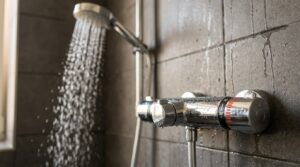
A thermostatic shower mixer keeps the temperature of the water coming out the same by constantly changing the ratio of hot and cold water going into the mixing chamber. Inside the valve body is a cartridge that has a temperature-sensitive element, typically a wax capsule or a bimetallic coil. The element expands when it becomes hot and contracts when it cools. That motion moves a little shuttle back and forth between the hot and cold connections, increasing one flow while decreasing the other. The user sets the desired temperature using the control knob and the cartridge will hold this temperature even if the supply pressure or temperature changes. That is also why thermostatic valves prevent unexpected scalding when someone flushes a toilet elsewhere in the home. The downside is that this means the valve can never push more heat than the hot supply can offer, and if the hot side is restricted, the cartridge will compensate with more cold water.
Why you don’t always get hot water at the shower from a hot tank
The temperature on a water heater dial is the temperature of the water at the thermostat, not the water at the shower head. Hot water travels from the tank to the shower through pipes, elbows, valves and fittings, and each foot of uninsulated pipe loses heat to the surrounding air, walls and floors. Long runs to bathrooms upstairs, pipes in cold subterranean spaces and low flow rates all enhance heat loss, as the water is in transit for greater time. Some heaters are also cooler than their dial says and therefore a simple thermometer reading at a nearby tap is significantly more dependable than the label on the tank. The tank may feel quite hot to the touch, but it has a cooler layer toward the bottom. So the usable supply is smaller than it seems.
Scaled or Worn Thermostatic Cartridges and Wax Elements
The cartridge is the heart of the mixer, and the most common internal failure location. Scale deposits of calcium and magnesium build up on the shuttle, the seals and the temperature sensor when using hard water, causing the moving parts to become stiff and slow to react. If a shuttle is too far downstream of the cold inlet, the valve may add more cold water than the control setting requires. Wax elements also become fatigued after years of heating and cooling cycles. A weaker element may no longer reach its specified range . Typical symptoms are a temperature that varies while you are showering, a handle that has to be turned beyond the marked position to sense the warmth and water that is hot one minute and lukewarm the next. The most reliable remedy is usually to replace the cartridge with a matching manufacturer part.
Supply imbalance hot and cold
Thermostatic valves work best when the hot and cold supply are at identical pressure. If the cold line is at a much higher pressure than the hot line, the valve must restrict the cold inlet substantially, and the cartridge might bottom out before the mix is warm enough. Often the hot isolation valve is not fully open. The inlet strainer may be blocked. There may be sediment at the output of the heater. The hot pipe may be too small. A pressure-reducing valve may be serving only one line. Manufacturers typically mention an operating range , usually somewhere around 15 to 70 psi . A big differential between the two sides can push the valve out of that . Symptoms are heavy cold flow, light hot flow, and a shower that improves when somebody turns off a cold tap somewhere else. The best answer is to measure the pressure in both supply lines.
Cross-Flow Check Valves, Reversed Connections
Most thermostatic mixers have small non-return valves in each inlet to prevent water flowing from the higher pressure side into the lower pressure line . If one of these check valves malfunctions or sticks open, cold water crosses over into the hot pipe. The hot intake then receives a mixture of cold and hot water and the output becomes tepid. A telltale symptom is a hot pipe that never gets totally hot, even with the shower off, or a hot tap that runs warm after using the shower. Another common reason is reversed connections, especially after a replacement or redesign. Most of the valves are set up to have hot water on the left and cold water on the right. If you invert them, then the cartridge gets mixed up and it limits the temperature. In general, the problem can be solved by checking the inlet markings and testing the check valves.
Water Heater Problems Cause Decreases in Hot Water Available
The heater may not be able to supply its maximum volume of hot water even if the thermostat is set to a high temperature. With a damaged or fractured dip tube the incoming cold water is directed to the top of the tank where it mixes with the hot water and causes the outflow temperature to be lower. Sediment insulates the heating element or burner, extends the recovery time and reduces the useable capacity. With an electric heater, if the lower element fails then just the top half of the tank is heated, so the shower starts hot, and becomes luke tepid part way through. A broken thermostat could also show a greater temperature than the water actually gets to. To isolate heater defects you flush the tank once a year, test the elements with a multimeter and measure the output at the nearest tap. Generally, a safe and effective aim is to set the temperature between 120 and 130 degrees Fahrenheit.
Calibration Settings and Temperature Limit Cutoffs
Many thermostatic mixers contain a safety limit stop that stops the handle from being turned all the way to the hottest setting, frequently keeping the output at a pleasant but moderate temperature. If the stop was set low during installation or the cartridge was reconnected without correct calibration, the shower may never reach the temperatures you desire. Many valves also have an adjustable hot limit, usually a small ring or screw directly beneath the handle cap, which may be adjusted by installers with simple tools. After a cartridge change or plumbing fix, the handle position may not reflect the real outlet temperature . The mix will be lukewarm even if the valve is functioning correctly . Check the outlet temperature with a thermometer, adjust the stop according to the manual and always leave it in houses with children or older individuals.
Diagnosis, repair and prevention step by step
Then switch on the shower ( on hot ) . Measure the outlet temperature . First measure the heater output at a neighboring tap . Ensure both isolation valves are fully open, clean the inlet strainers and check that the hot and cold connections are correct. If the heater and supply are OK, turn off the water and pull out the cartridge. Soak the cartridge in white vinegar to loosen the scale. Replace the cartridge if the shuttle sticks or the seals look damaged. Insulate any exposed hot pipes, and for long runs to far-off restrooms, consider a recirculating system. If you are in hard water areas, descale the valve every year or two and flush the heater yearly. If you notice cross-flow, continuous imbalance of pressure or heater issues involving gas or electrical installation, contact a skilled plumber. Do not heat the tank above 140 degrees since the risk of scalding grows dramatically.