How Broken Toilet Flapper Chain Linkages Cause Intermittent Phantom Flush Cycles
How Broken Toilet Flapper Chain Linkages Cause Intermittent Phantom Flush Cycles
Few household sounds are more unnerving than a toilet that refills itself in the middle of a calm nite. No one has touched the handle and nobody is in the bathroom but the fill valve hisses and the tank gurgles and sometimes the whole bowl seems to flush of its own accord. This is called a phantom flush, or ghost flush, and usually indicates that water is slowly leaking from the tank to the bowl. The most typical escape point is the flapper, the rubber seal at the bottom of the tank, together with the tiny chain connecting it to the handle lever. If the chain is tangled, stretched, or hung at the wrong length, the flapper may not seat properly, allowing a little amount of water to flow past it. When the tank level dips, the fill valve starts a fresh refill cycle. Here’s how the linkage works, why faulty chains produce intermittent phantom flushes, and how to identify and remedy the problem.
Flapper and Chain Linkage Operation in the Tank
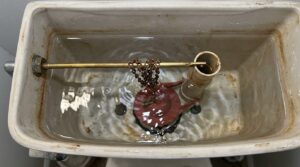
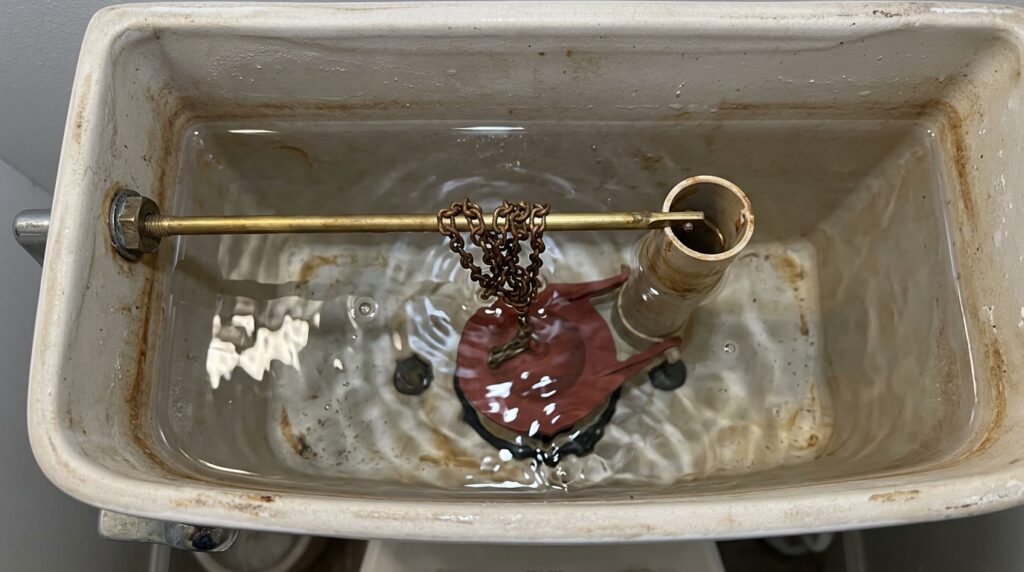
But a normal gravity toilet has a simple flush mechanism, thus little errors matter a lot. A handle on the outside of the tank cranks a trip lever on the inside. The lever arm pulls a fine chain, generally of stainless steel or brass or plated metal beads, sometimes plastic links. The opposite end of the chain is attached to the flapper, a rubber or silicone disk that seals the flush valve opening at the bottom of the tank. When the chain is lifted , the flapper is lifted . Water rushes into the bowl and the flapper floats for a moment , then drops back onto its seat , stopping the flow . A little slack is necessary in the chain when the flapper is closed for a satisfactory seal. Too much or too little tension changes the way the flapper rests and that is where phantom flushing starts.
What a Phantom Flush Actually Is
Most of the time a phantom flush is not really a flush. This is a refill cycle due to a gradual leak. If the flapper does not seal correctly, some water will pass from the tank to the bowl and the water level in the tank will slowly drop. The valve opens and refills the tank when the water level dips below the shutoff point of the fill valve. This makes a hissing or running sound with no one near the toilet. Sometimes the leak is big enough to significantly empty the tank, and sounds like a quick flush. The cycle time between leaks might be anywhere from a few minutes to over an hour, depending on the amount of the leak. Many homeowners ignore it since it is quiet and irregular, but it can waste hundreds of gallons a month and raise water expenditures
How a Broken or Damaged Chain Keeps the Flapper from Sealing
Chain linkage has numerous weak points in the hook at the flapper ear, in the clip at the trip lever and in the individual links in between. If a link opens, a bead snaps or a clip bends, the chain might become misaligned and pull the flapper off center. A flapper that is not sitting square cannot push evenly on the flush valve seat and water leaks along one edge. A partly broken chain may also hang so that a loose end hangs over the seat and acts as a little wedge under the rubber. In some circumstances, the chain falls completely off the lever and homeowners adjust by attaching it to a different hole or looping it twice, which affects tension. A small bend in the metal can hold the flapper off the seat a millimeter.
Long, Short or Tangled Chains
One of the most prevalent reasons for leaks is chain length, even if nothing is actually damaged. A chain that’s too short exerts steady pressure on the flapper and prevents it from dropping entirely into position. If the chain is overly long , it forms a loop of slack that may fall under the flapper and catch a link between the rubber and the seat . Sometimes the flapper gets tangled with the fill valve, the overflow tube or a refill line, which might hold it partly open. When the flapper is closed the best setting has around two links or a half inch of slack. A lot of folks either shorten the chain too much after a prior repair or leave an excess tail which flutters around the tank. The hook is commonly moved one link to solve the problem.
Corrosion, Mineral Deposits and Material Wear on Chain Parts
Small metal bits do not do well in tank water. Chains, hooks and clips are slowly corroded by constant dampness, hard water mineral deposits and chemicals from in-tank cleaning tablets. Chlorine and bleach based pills are particularly destructive as they damage plated metal and weaken the links and deteriorate the rubber flapper at the same time. A rusted chain becomes stiff, loses its suppleness, bends into odd shapes, and does not hang smoothly. Mineral crust can also cement links together or build up on the hook causing the chain to behave like a short hard rod rather than a flexible string. Brittle plastic clips break and fall off unobserved with age. Rust particles can also build up on the flapper seat preventing a good seal. A yearly or twice yearly inspection of these minor parts will detect most deterioration before it leads to leaks.
Phantom Flushes – Why Do They Only Happen Sometimes?
The intermittent nature of the problem is frequently confusing to people but there are easy explanations: A chain that is slightly out of position can cause the flapper seal to work on some flushes and not on others depending on how the flapper settles after each cycle. A link that lands once on top of the seat may slide away the next time. Changes in water temperature, tank water level and household pressure can also affect the buoyancy of the flapper and how tightly it closes. Rubber flappers swell and soften when heated and stiffen when cold, so a leak that’s obvious overnight may resolve by afternoon. Vibration from surrounding appliances or a door slamming near the restroom can move Chain into a different position. That’s the sort of unreliability that makes leaks very simple to notice in a short inspection.
Dye Test and Sequential Diagnostic Approach
The simplest approach to test for a leak is a dye test. Lift the lid of the tank and add 10 drops of food coloring or a leak detection tablet into the tank and don’t flush. Wait for around 15-20 minutes and inspect the bowl. If you see any color in the bowl water, it signifies water is past the flapper. Next, turn the water supply off at the wall valve, flush once to empty the tank, and take a good look at the chain and flapper. Check for broken links, kinks, corrosion, tangles, and gaps between the flapper and its seat. Wipe the seat down with a towel to remove grit and verify the chain has about half an inch slack. Push down on the flapper with a finger to see if it sits flat. If the leak is corrected after correction, the linkage is at fault.
Repair, Replacement and Prevention
Most chain problems can be fixed in a few minutes using cheap parts. A broken chain or bent clip can be replaced with a corrosion resistant stainless steel version. Cut off any excess length to leave a little tail. If the flapper is deformed, slimy or more than around five years old, replace it too, because a worn seal will continue to leak even with a pristine chain. Match the replacement flapper to the flush valve size which is often 2-3 inches. Install the parts and verify the seal after flushing several times, turning the water on and repeating the dye test. To prevent future problems, do not use chlorine pills in the tank, clean the seat every few months and check the linkage when you open the tank. If the leaks remain after you replace the flapper, call a plumber as the flush valve seat may be damaged or the fill valve may be failing.