Diagnosing Weeping Baseboards: Capillary Draw from Unsealed Concrete Slabs
Diagnosing Weeping Baseboards: Capillary Draw from Unsealed Concrete Slabs
Weeping baseboards are a common symptom of hidden moisture problems in a home, but they are often misunderstood. Homeowners could observe moist trim, flaking paint, bloated baseboards or repeated discoloration along the bottom of interior walls with no visible plumbing leak or roof failure. Often it is not water ingress through the walls but moisture rising from an unsealed concrete slab, by the natural mechanism of capillary draw. Concrete is porous, and can absorb and transmit groundwater even where there is no visible standing water. Moisture can go upward to touch flooring materials, baseboards and drywall, which can create conditions for slow deterioration. By understanding the effect of capillary draw on unsealed concrete slabs, homeowners can detect moisture problems early, distinguish them from other types of water penetration problems, and adopt efficient long-term solutions to address the issue before significant structural damage occurs.
Concrete Capillary Draw
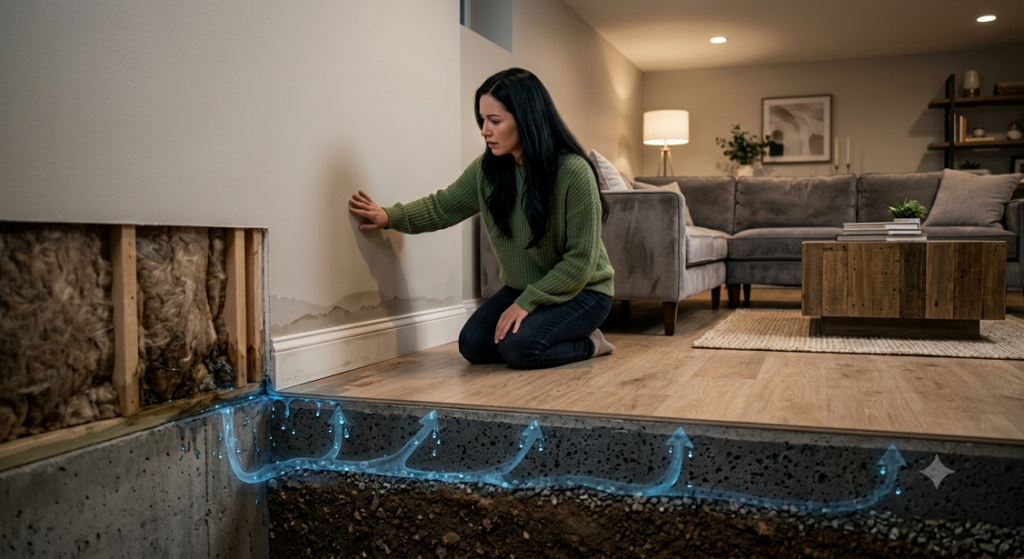
Capillary attraction is a natural physical mechanism that permits water to rise via microscopic pores and linked spaces in porous materials. The concrete features millions of small channels that still allow moisture to be transported years after the slab has hardened. These little passageways permit water to go upward against gravity when the groundwater or moist soil beneath the foundation is moist enough. Capillary draw is a slow, steady process, unlike flooding or leaking pipes, and typically goes undiscovered until symptoms arise in the home. The movement is caused by molecular attraction of water to the surface of the concrete, so even apparently dry slabs may be paths for hidden migration of moisture.
Why Unsealed Concrete Slabs Are Prone to Damage
Concrete slabs without proper moisture barriers or surface sealers are exposed to moisture from the soil underneath. Concrete may appear solid, but it naturally absorbs water whenever moisture is present below the foundation. Today, vapor barriers are commonly installed under the slab to help slow this movement of moisture . Older homes may not have appropriate barriers or they may have degraded and no longer prevent the migration of moisture . Moisture moving up through the slab encounters flooring materials and surrounding wall assemblies where evaporation is greatly reduced. This continual supply of moisture results in a lasting wet environment that slowly impacts interior finishes despite the absence of exterior water incursion.
Where moisture gets into baseboards
Moisture that rises through an unsealed slab will eventually reach the joint between the concrete and the wall framing and flooring system. Baseboards that are butted up to the floor and nailed in place are one of the first obvious construction elements to be affected by this moisture migration. Wood trim easily absorbs water from direct touch with wet flooring or concrete surfaces, causing it to swell, paint to fail, and eventually deteriorate. Through capillary attraction, moisture can go up into the bottom edge of drywall. This can lead to discoloration, soft materials, or isolated mold growth. As the moisture is coming from under the slab, just replacing damaged trim without addressing the underlying problem will typically lead to the same problem happening again.
How to Spot Warning Signs of Weeping Baseboards
The first signs of moisture via capillarity are frequently slight, and may be mistaken for ordinary wear. Paint may begin to peel or bubble a bit along the bottom edge of baseboards, and there can be some yellowing where the trim meets the floor. Slowly, wood baseboards will expand, pulling joints apart or causing corners to move slightly away from the wall. Persistent musty scents near outside walls or slab-on-grade rooms usually suggest high moisture levels beneath completed surfaces. In more severe situations, owners may see moist spots on the floor next to impacted baseboards, with no plumbing leaks present. Early detection of these warning indicators increases the likelihood of avoiding widespread moisture damage.
Differentiating between Plumbing Leaks and Capillary Moisture
Accurate diagnosis is important since moisture-related symptoms might easily be confused with leaking pipes or roof infiltration. Leaking plumbing usually results in localized wet areas that follow the water supply or drain lines. Capillary draw, though, usually produces larger moisture patterns that spread across several sections of wall or floor where the slab meets wet soil. Roof leaks are usually more obvious after a storm, and normally impact upper wall surfaces or ceilings before reaching the baseboards. Slab moisture is usually at the floor level and might be present irrespective of the weather. Familiarity with these differences helps to narrow the field of potential causes before any repairs are underway.
Effect on Flooring and Wall Coverings
Moisture that continuously rises through concrete does more than just ruin decorative trim. Wood fibers absorb water from underneath and can cause hardwood to cup or bend. Moisture seeping into the core can cause laminate to expand along the edges of panels. The adhesive used for laying vinyl flooring might deteriorate over time and raise or bubble the completed surface. When drywall is exposed to moisture for lengthy periods of time, it will lose its structural integrity and become more prone to mold growth. If the condition continues, even insulation inside lower wall cavities may hold moisture. Over time these impacts add up, driving up repair costs and lowering indoor comfort and air quality if the moisture source is not fixed.
Hidden Slab Moisture Diagnosis
Diagnosing weeping baseboards as caused by capillary draw requires a careful investigation utilizing proper diagnostic procedures. Moisture meters can discover high moisture content within baseboards, drywall, and flooring without causing major harm. Testing the concrete for moisture helps determine how much water is traveling through the slab itself. Infrared thermal imaging can detect cooler damp spots beneath floors or in lower portions of walls where evaporation is taking place. Additionally, the outside drainage characteristics, foundation grading, and surrounding soil moisture can be inspected to better understand the environmental elements leading to slab moisture. Incorporating varied inspection methods leads to greater diagnosis accuracy and less wasteful demolition.
Stopping Long-Term Moisture Problems
To stop weeping baseboards successfully, you must treat the source of the moisture, not just patch the damaged finish. Improving exterior drainage, maintaining adequate grade around the foundation, and directing roof runoff away from the slab would lower the quantity of groundwater that can be available for capillary migration. Existing homes can also benefit from the use of proper concrete sealers or moisture resistant flooring systems to help reduce moisture migration. Replace compromised vapor barriers whenever feasible during significant renovations, and choose moisture-resistant construction materials for places prone to dampness. Routine inspections also help discover reoccurring wetness early, before major degradation occurs. Homeowners who grasp the principles of how capillary draw is causing water to rise through unsealed concrete slabs can better identify hidden moisture issues, protect interior finishes and maintain the structural integrity of their homes through proactive moisture management and timely maintenance.