Stratification in Two-Story Foyers: Mitigating Extreme Temperature Imbalances
Stratification in Two-Story Foyers: Mitigating Extreme Temperature Imbalances
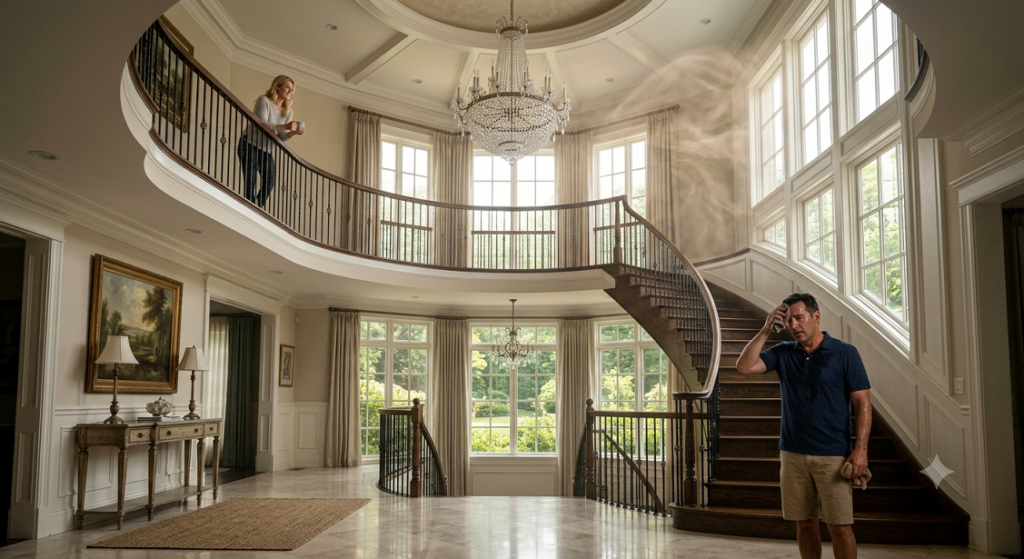
Two-story foyers make for an amazing architectural statement by adding a sense of space, plenty of natural light and an open visual link between different floors of a property. These large open spaces can improve the look and feel of an interior space but they also provide distinct heating and cooling issues which are often missed in day-to-day operation. Thermal stratification is one of the most common problems. It occurs when the warm air collects at the top of the entryway and colder air is concentrated at the lower level. This uneven temperature distribution can diminish indoor comfort, raise HVAC operating costs and place additional stress on heating and cooling systems. In the winter, homeowners may find the entryway is cold even when the rest of the house is warm, or in the summer, the ceiling area is too hot. Understanding how stratification develops in two-story foyers and discovering efficient strategies to prevent temperature imbalances can greatly enhance comfort, energy efficiency and HVAC performance throughout the home.
Thermal Stratification 101
Thermal stratification is the natural tendency of air in an enclosed environment to separate into strata of varying temperature. The warm air is less dense than the cool air , so it rises to the top of the room , while the cooler , denser air settles down toward the bottom . This is slightly less pronounced in an average height ceiling dwelling since the vertical distance is constrained . But two-story foyers provide enough height to create substantial layering of the air. Most of the warm air rises and becomes trapped at the top level when the heating systems are on during the cold months. As a result, the lower part of the foyer is kept cooler, generating a big difference between the temperature of the first and second levels.
Why Foyers With Two Stories Are More Imbalanced
The architecture of the two-story foyers allows for a better air movement than ordinary rooms. They also have a higher ceiling height, which gives more vertical volume for warm air to rise and stay suspended above the occupied sections. These doors often have large windows that can enhance temperature variations by allowing solar heat during the day and losing heat at night when it’s cooler. Open staircases up to upper floors also allow warm air to move through the house, making heating less effective at ground level. All these elements combine to render two-story foyers most prone to long-term temperature stratification during changing seasons.
Effects on Heating and Cooling Efficiency
HVAC equipment is largely responsive to thermostat temperatures, not conditions throughout the vertical area, and so is less efficient when temperature stratification occurs. In winter, thermostats on the main floor could call for heat when significant quantities of warm air are trapped near the upper ceiling. This causes unnecessary heating cycles and higher energy use. In the summer, the cooler air will tend to concentrate near the floor and the warmer air will accumulate overhead, requiring air conditioning systems to run longer to attempt to maintain pleasant temperatures. The outcome is that the HVAC system is working as designed but energy expenditures are higher and overall comfort is lower.
Recognizing the Typical Symptoms of Stratification
A two-story entryway is stratifying thermally; and there are some visible indicators as well. Homeowners typically discover during the heating season that the flooring near the door are frigid, but the higher halls are substantially warmer. Even with the HVAC system running 24/7 temperature variances across floors can be more than a few degrees. Rooms close to the entryway can also become difficult to heat or cool reliably because conditioned air migrates toward the open vertical space. The occupants may adjust the thermostat often in an effort to increase comfort without fully correcting the imbalance. Many times the cause of repeated symptoms is not equipment failure but air distribution problems.
The Effect of Air Movement on Temperature Equilibrium
Air flow is a key factor in reducing temperature stratification in tall interior spaces. With insufficient circulation, warm and cool air stratify into stable layers that persist for long durations. Good air flow direction aids in blending these layers together, providing a more uniform spread of conditioned air from floor to ceiling. In winter, ceiling fans in lofty foyers can gently push warm air down without producing uncomfortable drafts. HVAC supply and return vent location also influences overall circulation by fostering continuous air movement throughout the vertical space. Better air flow helps heating and cooling systems provide more even temperatures, while running more effectively.
Importance of HVAC System Designing
The temperature management in a two-story foyer is greatly dependent on the architecture of the home’s HVAC system for its success. If the air distribution is not good, the stratification problem will not be solved even with properly sized equipment. A well-designed system considers ceiling height, volume of the room, window arrangement and air flow paths for deciding on the placement of supply and return outlets. Multi-zone HVAC systems go a step further by letting you set the temperature in the upper and lower levels of the home separately. In larger homes, variable speed blowers are always moving air at moderate speeds, keeping temperature changes small without a large increase in energy. Thoughtful HVAC design maintains the same comfort level on both floors of the entryway.
Enhanced Insulation and Air-Sealing
The building envelope performance greatly affects the intensity of thermal stratification. Heat escapes through poorly insulated ceilings, walls or windows . In winter the heating system has to work harder . Uncontrolled air leakage through doors, windows, and attic penetrations also upsets the carefully balanced pattern of indoor circulation. Improving insulation in the attic, closing air leaks and installing high-performance windows assist stabilize inside temperatures and reduce heat transfer through the building exterior. Not only do these changes save energy expenses, but they also reduce the likelihood of excessive warm air buildup at the ceiling by providing more uniform temperature conditions throughout the residence.
Long-Term Strategies for Greater Comfort
Good air circulation, efficient HVAC operation, and optimum building envelope performance is the best way to control stratification in two-story foyers. Proper maintenance of your heating and cooling equipment will ensure continuous airflow and also minimize loss of performance from dirty filters or blocked vents. Correct adjustment of ventilation systems, correct balancing of air distribution and seasonal running of ceiling fans all contribute to more even temperature distribution between levels. Homeowners considering renovations may also want to investigate zoning upgrades or smart thermostats that can better accommodate the different conditions across the property. By learning about how thermal stratification develops and implementing practical strategies to improve air movement and energy efficiency, homeowners can greatly reduce extreme temperature imbalances, improve comfort throughout the year, and boost the overall performance of their heating and cooling systems.