Brick Spalling and Mortar Deterioration Caused by Trapped Vapor Drives
Brick Spalling and Mortar Deterioration Caused by Trapped Vapor Drives
Brick masonry is known for its durability and extended service life. However, even well-built brick walls can face slow deterioration if moisture becomes trapped in the assembly. The two most common types of damage are brick spalling and mortar deterioration. These are often associated with poor moisture management rather than the age of the structure. Trapped vapor drives are a big contributor. Water vapor gets inside the wall, but can not get out properly. Wet, dry, freeze, thaw cycles slowly degrade the masonry as moisture collects within bricks and mortar. What damage can occur begins as little surface blemishes and, if not corrected, will escalate into major structural difficulties. Homeowners and property managers who understand the role of trapped vapor forces in masonry deterioration can determine the actual cause of damage and pick repair procedures that will preserve the long-term integrity of brick buildings.
Vapor drives in masonry walls: an understanding
Vapor drive is the natural flow of water vapor from places of higher moisture concentration to places of lower moisture concentration. This movement is driven by variations in temperature, humidity and air pressure across a building envelope. Brick and mortar, the porous materials used in masonry construction, are inherently permeable to certain moisture movement. Under normal conditions, the absorbed moisture can be slowly evaporated and escape without causing any damage. When coatings are impermeable , wall assemblies are poor , or ventilation is absent , vapor gets trapped in the masonry and problems arise . It does not dry out but stays inside the wall and has an effect on the brick and mortar for long periods of time.
How Moisture Gets Trapped Inside Brick Walls
Brick walls are exposed to many sources of moisture throughout the year, including rain, humidity, condensation and ground moisture. Under wet conditions bricks will soak up some of this water but are intended to release it as the conditions dry up. Such problems occur when vapor barriers, waterproof coatings or dense repair materials impede normal evaporation. Moisture that enters the wall can no longer leave efficiently, and damp conditions continue in the brickwork. In the colder months, interior humidity can also move into exterior walls, contributing to moisture accumulation. This traps the water and eventually saturates the bricks and mortar, creating the perfect environment for long-term degradation.
How Does Brick Spalling Happen?
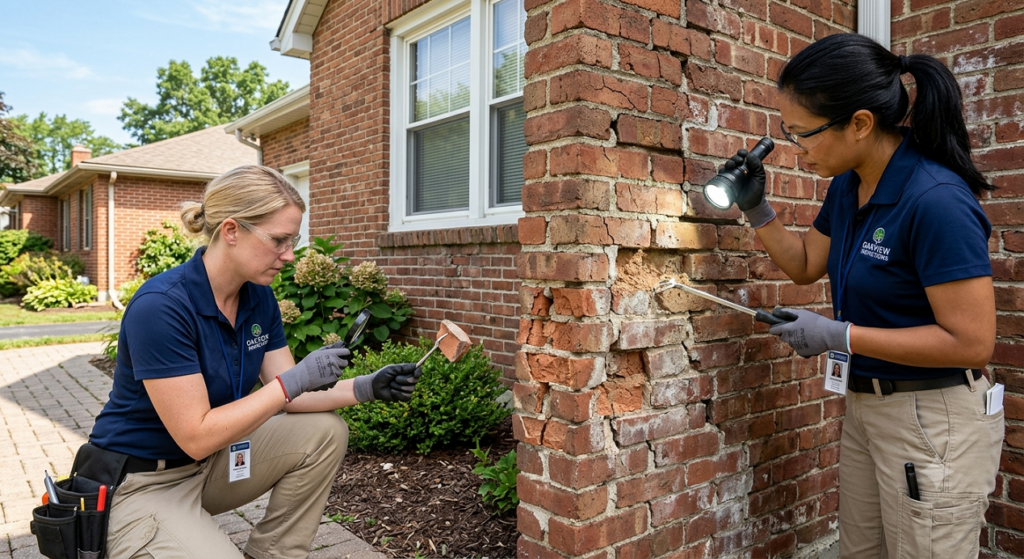
Brick spalling is induced when moisture creates internal stresses in the brick that cause the outside surface to crack, flake or break away. If bricks that are soaked are exposed to freezing temperatures, the water in the pores expands as it turns to ice. This expansion creates a lot of internal pressure which gradually undermines the outside surface. The freeze thaw cycles repeat , expanding the fissures until bits of brick spall off the face . Even in moderate winter areas, repeated soaking and drying can eventually deteriorate brick surfaces when moisture cannot evaporate adequately. Spalling generally begins as little chips, and then progresses to greater areas of material loss, impacting the look and durability.
Why Mortar Deteriorates Along With Brick
Mortar joints are generally more susceptible to moisture damage than the surrounding bricks because they are supposed to be slightly softer and more permeable. This allows for tiny shifts in the building fabric to be accommodated, and is also the main conduit for moisture to escape from the wall. Trapped vapour keeps mortar moist for long durations, increasing the chances of erosion, cracking and slow disintegration. Freeze thaw cycles accelerate this process by increasing moisture in the pores of the mortar over and over. As time goes on, the joints weaken and are less able to hold the bricks next to each other properly. This increases the risk that more damage will occur to the masonry and water will seep throughout the entire wall assembly.
Typical Construction Procedures That Trap Vapor
Some construction materials and maintenance practices are unwittingly conducive to supporting trapped vapor drives. Brick walls naturally discharge moisture. Applying impermeable sealants or waterproof paints to the exterior of brick surfaces sometimes hinders this ability. Likewise, the use of dense cement-rich mortar rather than ancient lime-based mortar could restrict permeability, trapping moisture in adjacent bricks rather than venting it out via the joints. Vapor barriers on the interior erected without regard to the drying capability of the wall may also change the moisture transport in masonry assemblies. Though these materials might seem to help with water resistance at first, they can cause long-term moisture issues since they don’t allow for natural evaporation.
Identifying Early Signs of Masonry Damage from Moisture
Early identification can prevent the occurrence of major structural degradation caused by moisture concerns. Efflorescence, white mineral deposits, often indicates moisture traveling through the masonry and bringing dissolved salts to the surface. If the wall is holding too much moisture, you may also see flaking brick faces, crumbling mortar joints, and localized discoloration. Additional clues of hidden moisture accumulation can be inside peeling paint, wet odors or discoloration near exterior stonework. The symptoms will vary in severity, but when they occur it usually means that the wall is not drying properly. If you can identify these warning signs early, your maintenance will be more effective and you’ll control future repair expenses.
Why Proper Drying of Walls Is Important
Masonry is successful when the wall can handle moisture, not when it entirely stops water from entering. Brick will inherently absorb some moisture during typical weather exposure so effective drying paths are necessary for long term durability. The breathable building material allows the collected moisture to evaporate slowly without hurting the inside parts. Proper flashing, drainage cavities and weep holes aid to drain liquid water and help to keep evaporation continuing. Keeping indoor humidity in check also limits vapor flow into outside walls during cold weather. Controlled drying is recommended to prevent moisture accumulation and to eliminate conditions that cause brick spalling and deterioration of the mortar.
Stopping Brick Spalling and Mortar Failure
The first step toward long-term preservation is to select materials that allow masonry walls to breathe and control moisture. Breathable water repellent solutions let the wall to breathe and resist rain, without trapping moisture inside. Re-pointing failed joints with mortar of equivalent permeability to that originally used retains the moisture performance of the wall as planned. Repairing roof leaks, broken gutters and damaged flashing can prevent too much water from getting into masonry in the first place. Regular inspections provide an opportunity for tiny cracks, loose mortar and drainage problems to be remedied before major degradation occurs. Knowledge of the effects of trapped vapor drive can help homeowners avoid repair approaches that increase the problem and instead protect the strength, look and lifespan of brick masonry through balanced moisture management and good building maintenance.