Negative Indoor Air Pressure: How Tightly Sealed Homes Draw Sewer Gases
Negative Indoor Air Pressure: How Tightly Sealed Homes Draw Sewer Gases
Today’s homes are built to be more energy efficient than ever with better insulation, sophisticated windows and thorough air sealing to avoid undesired heat loss. These changes can reduce energy use considerably but they can also cause unanticipated imbalances in indoor air pressure if ventilation is not correctly handled. A less recognized effect is negative interior air pressure, which is a situation when the pressure of the air within the home is lower than the pressure outside. As this imbalance takes place, the building itself will automatically draw replacement air from any opening accessible, including plumbing systems connected to sewer lines. If plumbing traps are dry, damaged or inadequately vented, sewer gasses may enter the living space instead of remaining safely contained within the drainage system. For good indoor air and to prevent chronic odor problems, it is important to know how tightly sealed homes can unknowingly pull sewage gasses into.
Understanding Negative Indoor Air Pressure
Negative indoor air pressure: More air is leaving a home than entering. During normal operation, all exhaust appliances, such as bathroom fans, kitchen range hoods, clothes dryers and some ventilation systems, remove indoor air. When an equal quantity of fresh air from outside is not permitted to enter the building through the specified ventilation routes, the pressure in the building slowly drops. Nature tries to equalise things by sucking air through the path of least resistance. Older homes often have several leaks around windows, doors, and wall assemblies for air to leak through. But in carefully sealed modern dwellings, unforeseen channels such as plumbing systems, utility penetrations or crawl spaces may be important sources of replacement air.
How Plumbing Systems Usually Keep Sewer Gases Out
Residential plumbing systems use many safety mechanisms to prevent sewer gasses from entering occupied spaces. Every plumbing fixture has a trap that collects a little quantity of water, which always maintains a water seal between the house and the drainage system. Plumbing vent pipes go up through the ceiling to equalize pressure in drain lines and to properly release gases outside. Normally the components work together to ensure correct airflow and to prevent unpleasant or potentially hazardous gasses from leaking into residential areas. When these barriers work appropriately, the sewage gasses are restricted to the plumbing system and do not leak out even when the water in your home is used normally.
Why Are Tightly Sealed Homes More Likely To Be Problematic?
By building energy-efficient homes, uncontrolled air leakage is greatly reduced, making homes more comfortable and less expensive to heat and cool. But less leakage also implies less opportunities for outside air to naturally replace the exhausted indoor air. The exhaust equipment is powerful and is operating without sufficient makeup air. The pressure differential in the building increases. As negative pressure increases, the house begins sucking air through any opening it can find—including plumbing systems with weak seals. This process doesn’t mean there is faulty plumbing. It is more a result of the interaction between building envelope, mechanical ventilation and pressure balancing. Pressure control should also be considered in the design or restoration of well built dwellings to prevent sewage gas infiltration.
The Purpose of Dry Plumbing Traps
Dry plumbing traps are one of the most prevalent routes for sewer gasses to get into homes that are under negative pressure. The water in the traps of infrequently used fixtures, like basement floor drains, guest bathroom sinks, utility tubs or seasonal showers, might slowly evaporate. When the water seal is removed, the drain line is directly exposed to the indoor environment. If the house creates negative pressure it will easily pull air out of the sewer system through the dry trap. For most homeowners the odors are only noticed in specific seasons or after the exhaust appliances have been running for some time, so the relationship is not easy to see unless you know something about building pressure dynamics.
How Do Ventilation Systems Influence Interior Pressure?
Mechanical ventilation has a substantial impact on indoor pressure relationships. Large kitchen exhaust hoods , several bathroom fans , central vacuum systems , and clothes dryers can exhaust hundreds of cubic feet of air each minute . When there is no deliberate supply of fresh outdoor air to replace this exhausted air the dwelling becomes more and more depressurized. This effect is amplified in modern airtight architecture, as there are fewer natural leakage paths to balance the air flow. Ventilation systems that are properly designed will account for both supply and exhaust air and will maintain pressure conditions that make it less likely that sewer gas will get in while still being energy efficient and keeping the indoor comfort throughout the house.
Recognizing Signs of Negative Pressure Issues
Negative indoor air pressure on building performance may be indicated by several common household symptoms. Sewer odors that occur exclusively when the exhaust fans or dryers are running are frequently indicative of airflow through the plumbing system caused by pressure. Other signs of indoor depressurization may include doors that are difficult to open just after closing, fireplaces that backdraft into the room, and strong drafts around electrical outlets or attic access panels. Some households find that odors become harsher in the colder months when windows are closed and heating systems are always running. Symptoms encompass several building systems, therefore the correct diagnosis involves a view of the airflow patterns, not just the plumbing.
How to Tell Where Sewer Gas is Coming In
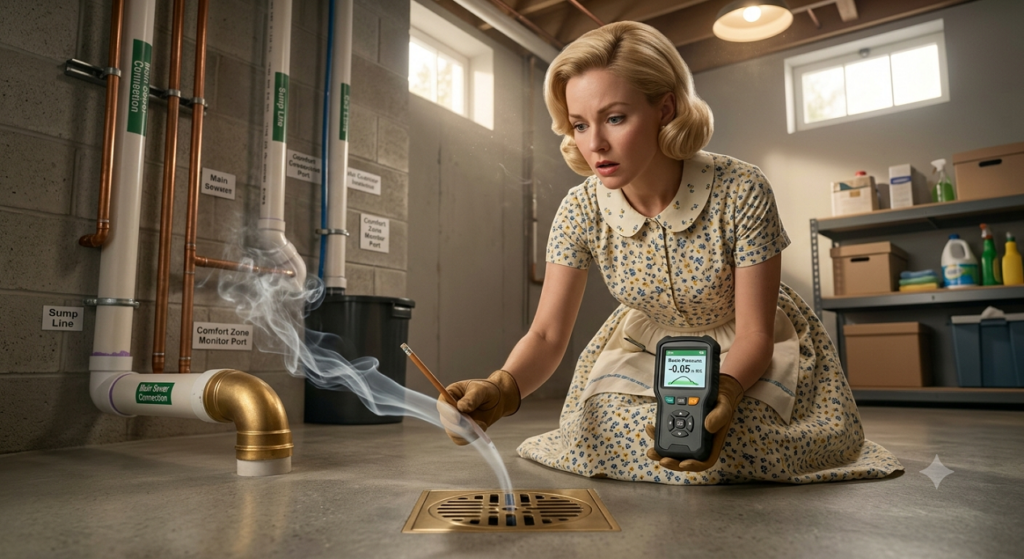
Effective diagnosis begins with locating the source of the sewage gasses and the conditions that permit their entry into the house. The first step is to check the plumbing traps for good water seals, especially for those fixtures that are used infrequently. Vent pipes should also be checked to make sure they are open and have the ability to equalize pressure in the drainage system. A look at exhaust equipment, air sealing techniques and overall ventilation performance can assist determine if negative pressure is part of the problem. Sometimes pressure testing or smoke testing might reveal hidden paths of airflow that would go unnoticed otherwise. A complete assessment will resolve ongoing odors by correcting plumbing integrity and the building’s pressure balance.
Stopping Sewer Gas Infiltration in Airtight Homes
Long-term prevention is based on a balanced relationship of air sealing, ventilation and plumbing performance. Regularly running water through seldom-used plumbing fixtures keeps the water traps full and the protective seal against sewer gasses intact. Where necessary, trap primers can automatically restore water in infrequent use floor drains. Keeping plumbing vents clear will make sure the drainage system will work as designed when the pressure changes. Adequate makeup air should be supplied to residences that are tightly sealed and have large exhaust appliances by mechanical ventilation systems. Airtight construction offers energy savings, yet sewer gases need not enter the indoor environment if proper plumbing maintenance is combined with balanced ventilation design and effective pressure management to keep living conditions healthy and comfortable for the entire year.