Diagnosing Ghosting on Ceilings: Thermal Bridging vs. Particulate Accumulation
Diagnosing Ghosting on Ceilings: Thermal Bridging vs. Particulate Accumulation
Homeowners often worry about dark streaks and shadow-like patterns that form on ceilings because they look like water damage, mildew or smoke residue. But in many such cases, these odd patterns are the consequence of a phenomena widely known as ceiling ghosting. Ghosting grows over time and is most apparent in the winter months when heating systems are in constant use. The discoloration may look frightening, but the root causes are generally connected to heat performance and airborne particles, not severe structural breakdown. Two of the most prevalent causes are thermal bridging and particle collection, both of which can create similarly seeming stains. It is important to understand the variations in these processes to make a good diagnosis and select the correct healing plan. Knowing what causes ghosting will allow you to fix those issues rather than just repainting the areas impacted so that the same patterns do not recur in the future.
Thermal Bridging and Its Impact on Ceiling Surfaces
Thermal bridging is when heat flows through materials that conduct energy better than surrounding insulation. Ceiling joists, frame members, metal fasteners and other structural materials can provide paths for heat to escape more quickly. If these areas are cooled to a temperature below the neighboring insulated spaces, the moisture in the indoor air is more likely to condense on the surface under specific conditions. Even without obvious condensation, the lower temperature produces a situation where airborne particles can stick more easily. Over time this process builds up black lines that often mimic the structural plan buried below the drywall. This is frequently confused with concealed leaks as the discoloration follows structural patterns but the origin is entirely different.
How Particulate Buildup Causes Similar Stains
Particulate accumulation is the slow accumulation of small airborne particles that settle on ceiling surfaces over time. They may consist of household dust, cooking residues, soot from candles, emissions from fireplaces, textile fibers and minute particles generated by ordinary activities. Warm air naturally rises to the ceiling and transports dispersed particles around the living room. When these particles hit cooler parts of the ceiling, they are more likely to stick to the surface. Over months or years the build-up shows up as grey or black streaks. Unlike dirt, which spreads evenly throughout a room, particulate buildup tends to concentrate in certain patterns, depending on where airflow and temperature differences cause particles to settle most densely.
Visually Understanding the Differences Between the Two
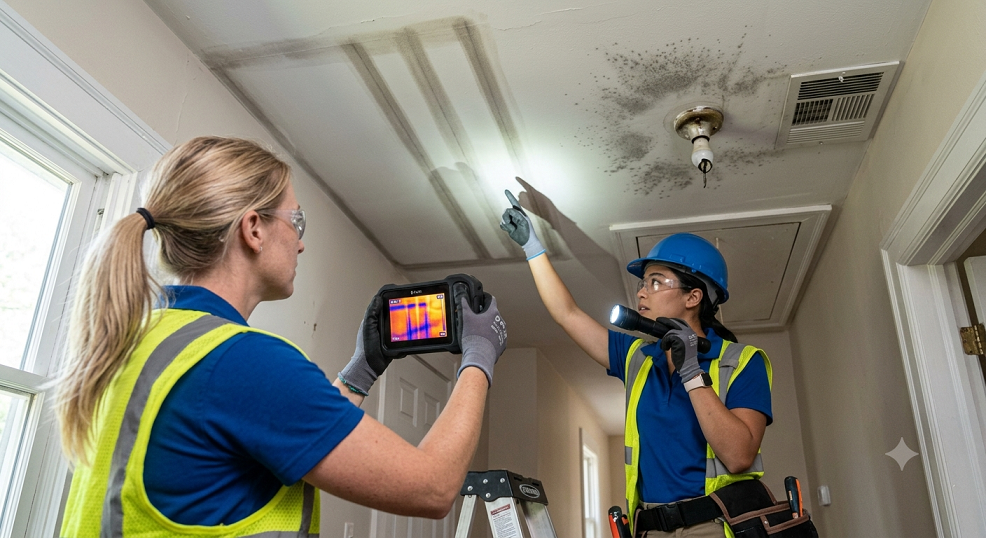
Thermal bridging and particle accumulation often occur concurrently, but can provide important diagnostic signals if observed carefully. Thermal bridging commonly presents itself as straight lines following ceiling joists or other framing members buried behind the drywall. The spacing of the stains is often the same as standard framing sizes, thus the pattern has an uncanny regularity. Conversely, particulate build-up can cause softer, less symmetrical discolouration influenced by airflow from heating vents, ceiling fans or windows. Open ceiling surfaces are probably less likely to trap airborne particles than surfaces near recessed lighting, HVAC registers, and corners of rooms. Knowing these visual traits can help narrow down the most likely problem before trying unnecessary remedies.
Indoor Airflow and the Formation of Ghosting
The importance of air movement in the perception of ghosting cannot be overstated. Heating and cooling systems circulate air in a home, bringing with it tiny particles that can remain airborne for a long time. The movement of these particles is influenced by ceiling fans, supply registers, return grills and natural convection currents. As heated air rises and cools against ceiling surfaces, flying debris begins to settle in predictable places. In rooms with insufficient air circulation, particles may get held longer and lead to concentrated buildup. Excessive air flow around vents can blow impurities to specific areas of the ceiling leaving tell-tale signs of discoloration. Assessment of airflow conditions is therefore a critical step to diagnose recurrent ceiling ghosting.
Humidity and temperature differences enhance visibility
The level of humidity in the air greatly impacts the speed of ceiling ghosting. The higher the humidity, the more likely it is that moisture will migrate to cooler sections of the ceiling, even if the condensation may never be apparent. This tiny film of moisture makes the surfaces a little more sticky to dust and combustion particles. The problem is additionally exacerbated by seasonal temperature changes, especially between the warm interior air and the cooler ceiling structures in winter. Homes with uneven insulation frequently have greater temperature differences across ceiling surfaces, making ghosting patterns more noticeable over time. Keeping interior humidity levels balanced and temperatures stable lowers environmental conditions that promote particle adherence and repeated discolouration.
Common Sources of Airborne Particles in the Home
Much of the routine work of the home creates fine particles that collect on ceilings. Cooking, and especially frying dishes, releases tiny droplets of oil into the air of a building, which then swirl about before they congeal onto cooler surfaces. Burning candles, incense or fireplaces can release tiny soot that spreads throughout numerous rooms. Inside the home, sources of particles include tobacco smoke, pet dander, fabric fibers and dust from carpets or upholstered furniture. Typical cleaning operations may dislodge dust particles briefly, causing them to be redistributed over ceiling surfaces. This helps a homeowner understand why ghosting may show up sooner in some rooms even though they have the same insulation and construction.
Effective Diagnosis Before Starting Repairs
Diagnosis begins with the careful study of the staining pattern and the general environmental factors in the home. If you always see discoloration along the framing lines, it may be due to thermal bridging. If you notice more discoloration around vents, light fixtures, or other areas with a lot of airflow, then particulate collection may be the primary culprit. Before starting cosmetic repairs, it is useful to inspect attic insulation, look for air leaks, measure interior humidity, and assess ventilation performance. Repainting the ceiling without fixing the underlying issues typically means ghosting will reoccur within months. A comprehensive evaluation guarantees that the repairs address the obvious stains and the underlying causes for their formation.
How to Prevent Future Ceiling Ghosting
Long-term prevention includes minimizing temperature variations and the accumulation of airborne particles. Adding more insulation in the attic makes the ceiling surfaces stay closer to room temperature throughout the year, thereby reducing thermal bridging. You can also prevent uneven cooling that draws particulates by sealing air leaks around lighting fixtures, attic access panels and duct penetrations. Changing HVAC filters regularly, ensuring adequate kitchen ventilation, and reducing indoor sources of combustion will reduce the quantity of particulate matter flowing through the home. A reasonable level of humidity indoors can also help prevent particles from adhering to cooler surfaces. With better insulation, cleaner indoor air and appropriate moisture control, homeowners may greatly reduce the chances of ceiling ghosting returning following repairs, resulting in cleaner ceilings and a more consistent interior appearance in the long run.