Why Drywall Nail Pops Reappear Only During High Humidity Cycles
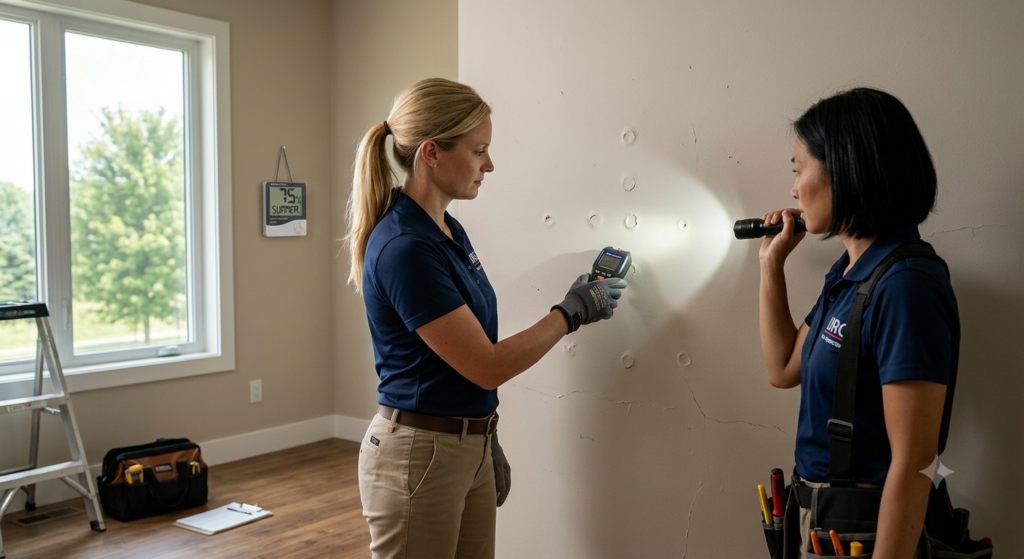
Why Drywall Nail Pops Reappear Only During High Humidity Cycles
One of the most aggravating cosmetic issues facing homeowners is the drywall nail pop, which seems to come and go at will. Most people have observed how walls and ceilings can be smooth for months and then suddenly develop little bumps when humid weather comes along. There’s a pattern here that repeats itself, and it’s not random. Changes in moisture levels directly impact the building elements in a home. Drywall, wood framing, fasteners and finishing compounds all act differently under increased humidity. These little motions cause stress under the painted surface until the fastener pushes out again. Knowing the reason of recurring nail pops during high humidity cycles allows homeowners to find the root issue rather than just treating the outward symptom. Once the relationship between seasonal moisture and structural movement is known, long term repairs become considerably more successful.
The Relationship Between Indoor Humidity and Drywall Movement
Drywall itself doesn’t expand much with humidity, but the things that support it do. Wood framing is naturally porous and will take on moisture from damp air . This causes studs and ceiling joists to swell somewhat . The expansion may be merely fractions of a millimeter, but it is enough to put some extra pressure on drywall panels that are tightly secured with nails or screws. As the framing moves, the fastener can start to work its way out through the joint compound that covers it. Usually the movement is hidden behind paint and finishes until it starts to press against the surface. In dry months, the framing decreases again, sometimes making the pop less visible. This dynamic expansion and contraction is also why many drywall problems seem to follow seasonal weather patterns, rather than being stable year-round.
Why Wood Framing Doesn’t Behave As Expected
WOOD Is a hygroscopic material . That means it absorbs and releases moisture depending on the surrounding environmental conditions . When humidity is high, moisture is absorbed into the wood fibers and causes mild swelling throughout the framing structure . Every stud, joist, and beam will undergo tiny dimensional changes that may seem insignificant individually but become critical over a complete wall or ceiling. When drywall panels are screwed tight to structure that changes size, stress builds up gradually at each fastener. In older homes the movement might be more obvious because many years of seasonal expansion and contraction wear away the hold between nails and the fibers of the wood around them. Even newer structures can experience reoccurring nail pops if humidity levels change substantially throughout the year, without effective environmental control.
What nail pops look like below the finished surface
A nail pop starts much before it’s seen on a painted wall. As framing shifts, the nail starts to loosen in the wood as the drywall panel tries to stay in place. Eventually the head of the fastener begins to push against the joint compound covering it. This first causes small fissures that are hard to see with the naked eye. The humidity rises and the framing opens again, the pressure building until a little raised bump forms under the paint. If the movement is not fixed, it might increase the size of the damaged region, which will result in obvious cracking surrounding the fastener. Simply pushing the hump back into position usually does not repair the underlying problem as the framing movement occurs throughout every successive humidity cycle.
Patterns Recurrent from Seasonal Moisture Cycles
The seasonal nature of reoccurring drywall nail pops is one reason homeowners become puzzled about them. In the winter, the heating inside usually lowers the relative humidity, causing the framing lumber to shrink a bit. This lower pressure might temporarily flatten visual bumps, giving the appearance the problem has corrected itself. As the weather warms and humidity rises the framing takes up moisture again and the expansion starts anew. The same fasteners are re-stressed and similar nail pops reoccur in the same spots. If the underlying movement is never addressed, this cycle might repeat itself year after year. Understanding this yearly trend can assist differentiate humidity-related nail pops from structural issues caused by foundation settlement or major building movement.
Structural Damage or Nail Pops
Not every fracture in a wall or elevated fastener means there is a significant structural problem. Nail pops caused by humidity are typically isolated to individual fasteners and are not typically accompanied by severe cracking over broad areas of drywall. Wider fissures running diagonally from windows, doors or corners of ceilings are frequently caused by structural movement due to foundation movements. Nails that pop from humidity tend to pop again in the same place, while the remainder of the wall remains solid. But if you have several drywall flaws and doors that stick, uneven floors, or expanding gaps, you may need to undertake some further investigation. Understanding the difference between cosmetic drywall movement and actual structural changes can help prevent wasteful repairs and make sure that important problems receive the right attention before they get worse over time.
Why Some Repairs Do not Last a Single Season
It’s often disappointing for a homeowner to see that the nail pops he has just mended reappear after one humid season. More often than not it is because only the obvious bulge was fixated, not the loose fastener underneath. If you don’t fasten the drywall in place, you’ll keep moving every time the framing swells and fills the damaged spot with joint compound. Sometimes the original nail should be supplemented or replaced by a correctly installed drywall screw fixed securely into the framing. A further finishing compound is then used to restore a smooth surface that will resist small movement. Surface fixes may appear great initially, but without stabilizing the underlying attachment, humidity cycles will eventually reproduce the same visual fault.
Don’t Let Moisture Build Up Indoors – Stop It Before It Starts
The most important thing you can do to help limit drywall movement is to keep the humidity inside consistent year-round. Maintaining the relative humidity level limits the amount of expansion and contraction the wood frame members will encounter. Good ventilation in kitchens, bathrooms, laundry rooms and basements helps minimize the accumulation of excess moisture inside the house. In warm weather, air conditioning systems naturally dehumidify, but in very humid areas whole-house dehumidifiers can provide an extra level of control. In addition, stopping air leaks to the outside and balancing temperatures inside the home provide better stability to the environment. Humidity control will not prevent every nail pop, but controlling seasonal moisture swings greatly reduces the stress exerted on drywall fasteners and surrounding finishing materials.
Popping Nails – Long-Term Fixes to Avoid in the Future
The best way to deal with reoccurring drywall nail pops is to use the right repair techniques and regulate moisture long-term. Replace loose nails or reinforce them with properly placed drywall screws that offer greater holding power within the framing. If the joint compound is damaged, the existing compound should be removed before new finishing material is applied to create a lasting surface. Once the repair is finished, keeping a consistent level of indoor humidity will reduce future expansion and contraction that might lead to the same fault re-occurring. Regular inspection of ceilings and walls means little faults can be fixed before they become huge cracks. All construction materials are impacted to some extent by seasonal humidity, but understanding how moisture impacts drywall systems can help homeowners make repairs that last longer and keep interior surfaces smooth over the seasons.