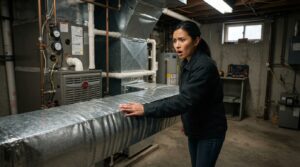
Diagnosing “Ghosting” Black Soot Marks Appearing Around Air Conditioning Vents
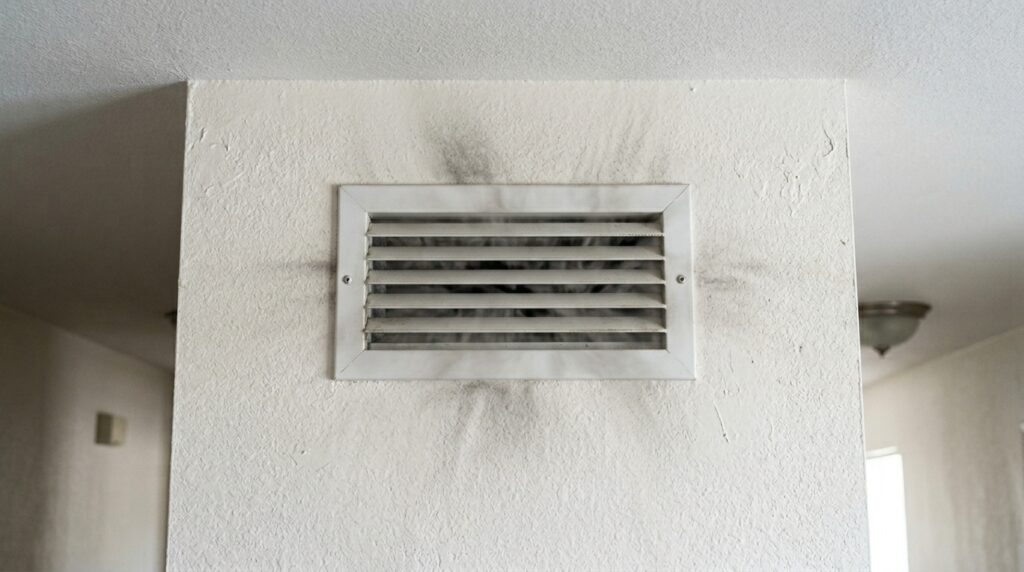
Diagnosing “Ghosting” Black Soot Marks Appearing Around Air Conditioning Vents
Ghosting is a frequent occurrence that occurs in the context of indoor air quality and circulation. It is characterized by the formation of black soot-like streaks around air conditioning vents. Although it may seem to be worrying, ghosting often develops gradually over the course of time. It is not the case that the heating, ventilation, and air conditioning system is “creating soot” since these black outlines or smudges often occur on the walls or ceilings near supply vents. Instead, they are the consequence of the interaction of airborne particles with variations in temperature and humidity levels, as well as irregularities in airflow patterns. In order to have a better understanding of this matter, it is necessary to investigate the circulation of air within buildings, the behavior of particles in moving air, and the impact of surface conditions on the deposition of particles.
The Causes of Vent Ghosting Relating to Airflow Patterns
The phenomenon known as “ghosting” takes place when air escapes from a supply vent and brings with it tiny dust, soot, or other airborne particles into the room. It is possible to estimate the airflow patterns that this air will take as it expands since the room geometry, temperature gradients, and surface friction all play a meaningful role. When air velocity decreases close to walls or ceilings, particles start to settle where they are. Over the course of time, these particles tend to build more thickly along the margins of vents, which is where the airflow is the most concentrated and forceful. This results in the formation of black outlines that are visible and that reflect the geometry of the register or vent grille.
Differences in temperature and thermal drafts have a role in the process.
A significant contributor to ghosting is the temperature difference that exists between the conditioned air that comes from the HVAC system and the air that is present in the surrounding room. During the operation of an air conditioner, cold air has a tendency to go downward, while warm air moves upward, resulting in the formation of continuous circulation loops around ceilings and walls. These thermal currents direct airborne particles toward certain surfaces, particularly in the vicinity of vents, which are places where there is a sudden transformation in air velocity. As the air against these surfaces cools or heats, the likelihood of moisture and particles adhering increases, which in turn intensifies the dark staining effect.
The Contribution of Dust and Particulate Matter in Indoor Environments
There is a mixture of dust, fibers, skin cells, cooking residues, and pollutants from the outside that are present in every interior environment. These pollutants enter the environment via doors, windows, and ventilation systems. When heating, ventilation, and air conditioning (HVAC) systems are operational, these particles always circulate. It is more likely that the concentration of particles will be greater near airflow exits in rooms that have higher dust loads or uneven filtering. Through the use of humidity as a binding agent, these particles eventually form bonds with the surfaces of the walls. Even very minor inefficiencies in filtering or cleaning procedures may greatly speed up the process of ghosting around vents.
The Importance of Air Filter Maintenance and Quality in the Environment
The main line of defense against the accumulation of particulate matter in HVAC systems is the air filter. A greater number of particles are able to pass through the filtering process and reach the living environment when filters are filthy, inadequate, or of poor effectiveness. Especially in areas with high airflow velocity, this makes it more likely that deposition will occur at vents. Infrequent replacement of filters lowers their efficiency, which in turn allows fine particles to flow continually. This occurs even when filters are theoretically present. In rooms with strong or directed airflow, this is especially important since it adds to the progressive darkening that occurs near vents.
Why Some Rooms Have a Greater Propensity to Display Ghosting
The occurrence of ghosting is often not uniform across a house, with some rooms being more pronounced than others. The likelihood of stains being more evident is increased in rooms that have a higher HVAC consumption, a stronger airflow, or a poor return air balance situation. Bedrooms and living rooms that have doors that are closed may also trap airflow patterns that enhance particle accumulation near vents. Furthermore, rooms that are located in close proximity to kitchens may have a larger concentration of airborne grease and combustion particles. These particles cling to surfaces more readily and contribute to a deeper discoloration over time.
What Part Does Humidity Play in the Adhesion of Particles?
The presence of humidity functions as a binding agent for particles that are airborne. There is a correlation between increased levels of moisture within the building and particles becoming somewhat sticky and more likely to attach to the walls and ceilings. It is possible for condensation to develop on colder surfaces on a microscopic scale around vents, which are locations where temperature and airflow changes occur. This results in circumstances that are perfect for the accumulation of dust and soot. The contrast between clean wall surfaces and darker vent outlines becomes more pronounced with time as a result of frequent exposure to ventilation cycles that include wet air.
Air Leaks and the Infiltration of Particles from the Outside
Leaks in the building envelope or duct system may sometimes make ghosting worse. This is the case in certain instances. If air that has not been filtered is brought into the heating, ventilation, and air conditioning system from crawl spaces, attics, or wall cavities, it may bring extra dust and debris into circulation. Due to the fact that vents are the locations where the airflow velocity varies the most suddenly, these particles often collect near vents. In addition, ductwork that is leaking might provide an uneven distribution of airflow, which may further concentrate the accumulation of particles in certain regions.
How the Positioning of Furniture and the Layout of the Room Affects Staining
The arrangement of a room may have an effect on the flow of air after it has exited a vent. The airflow may be redirected and localized turbulence can be created by large pieces of furniture, drapes, or things that are hung on the wall. The formation of uneven particle deposition patterns is often the result of these interrupted airflow zones. There is a greater possibility of visible staining occurring when air is frequently circulated in constrained routes close to vents. Over the course of time, these patterns grow increasingly distinct and apparent, particularly in spaces where there is just a little fluctuation in the airflow.
Identifying the Difference Between Ghosting and Mold or Soot Problems
To identify ghosting from more significant issues, such as the development of mildew or true soot caused by combustion, it is essential to make a distinction. The phenomenon known as ghosting is normally dry, uniformly dispersed, and follows patterns of airflow around vents. Mold, on the other hand, has a tendency to look patchy and is often accompanied with moisture damage or scents that are wet. The true soot that comes from combustion sources is often associated with heating appliances or smoking inside, and it leaves behind a darker deposit that is more consistent. In order to successfully implement remediation, it is necessary to first determine the proper cause.
A Guide to Minimizing or Doing Away With Vent Ghosting
Improving air filtration, airflow balance, and surface conditions are all necessary steps in the process of reducing ghosting. In order to collect smaller particles before they circulate, upgrading to HVAC filters with a better efficiency assists in this process. It is possible to limit the input of dust from outside sources by ensuring that ducts are properly sealed. In order to maintain a constant airflow and prevent stagnation zones where particles accumulate, improving the return air balance is beneficial. By cleaning vent covers and the surfaces that surround them on a regular basis, you may also avoid long-term accumulation from becoming obvious.
Preventing Airflow-Related Stains Over an Extended Period of Time
Ongoing maintenance of a consistent and clean airflow condition throughout the house is necessary in order to forestall further instances of ghosting. Regular maintenance of heating, ventilation, and air conditioning systems, which includes the replacement of filters and examination of ducts, helps to limit the circulation of particulate matter. Maintaining a balance between supply and return air not only enhances the overall efficiency of the system but also avoids localized accumulation. It is possible to limit the amount of particle adherence to surfaces by managing the humidity levels within. It is possible to prevent or eradicate vent ghosting by appropriate system maintenance and airflow control, which will allow for the preservation of clean wall and ceiling surfaces over time.