Diagnosing Insulated Glass Window Seal Failure Caused by Solar Pumping
Diagnosing Insulated Glass Window Seal Failure Caused by Solar Pumping
Insulated glass windows are engineered to boost energy efficiency by trapping a sealed layer of air or inert gas between a number of layers of glass. This design helps limit heat transfer, prevent condensation and keep the indoors comfortable year-round. Though these windows are designed for long-term performance, the perimeter seals are constantly subjected to different climatic conditions which slowly degrade their endurance. Another less recognized cause of early seal failure is a phenomena known as sun pumping. Over the course of the day, the sun heats the window again and again, and the temperature drops at night, causing pressure variations inside the insulated glass unit. These pressure changes put stress on the window seals . After thousands of expansion and contraction cycles , the seals begin to degrade . Once a seal fails, moisture and outside air can enter the insulated area, degrading thermal performance and visibility. Knowing the role of solar pumping in the loss of the seal in insulated glass windows allows homeowners to identify early indicators of problems, assess the window’s performance, and plan for repairs or replacement before the window becomes more severely damaged.
What is an Insulated Glass Unit (IGU)
Insulated glass units are two or more panes of glass separated by a spacer around the periphery. The space between the panes is usually filled with dry air or an insulating gas to increase the thermal performance relative to a single sheet of glass. A specific sealing system runs around the edge of the device, keeping moisture out and the insulating gas in. These perimeter seals must be flexible enough to handle natural temperature variations while still providing an airtight barrier through years of exposure to the elements. If the seal is still good, the window will continue to offer great insulation, better comfort and decreased energy costs.
What Is Solar Pumping?
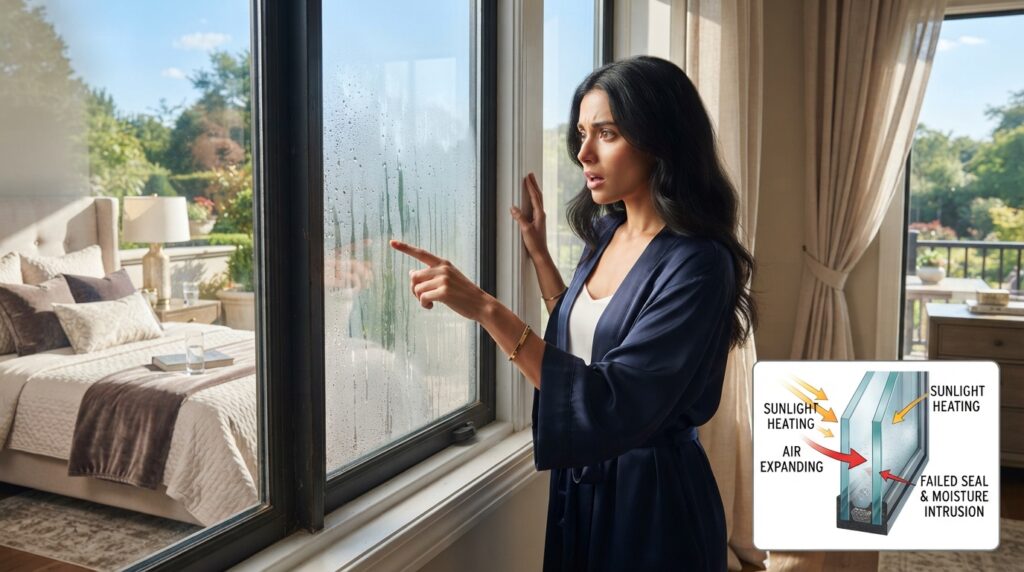
The repetitive shift in pressure that occurs inside an insulated glass unit as it is heated and cooled each day is called solar pumping. When the sun shines directly on the glass, the air or insulating gas sealed between the panes warms up and expands. This expansion is placing more stress on the perimeter seals. When the sun goes down or when the air is cooler, the gas inside the container shrinks. This lowers the pressure inside the container. These pressure variations alternate every day, especially on windows with a lot of direct sun. Each each cycle produces only a modest amount of movement, but over many years the cumulative effect gradually degrades the seal materials surrounding the insulated glass.
Why Sun Exposed Windows Are More Vulnerable
Windows on south or west walls usually experience the biggest effects of solar pumping since they receive bright sunshine for long periods of time. Dark window frames can absorb additional heat, increasing the temperature differential between day and night circumstances. The bigger the window , the bigger the volume of trapped gas . The bigger the volume , the bigger the change in pressure with temperature . In climates with large seasonal temperature variations, daily heating cycles and annual extremes of weather increase the mechanical stress on insulated glass seals. Thus, the seal in windows exposed to continuous sun radiation is likely to age faster than in equivalent windows situated in shadowed locations.
How Seal Failure Happens
Window seal failures usually do not happen immediately. Instead, frequent expansion and contraction with temperature changes gradually decreases the flexibility and bonding strength of the sealing materials. Over time, microscopic fractures can occur in the seal, enabling the insulating gas to escape and outside air and moisture to enter the insulated chamber. As moisture builds up between the panes of glass condensation begins to collect inside the sealed unit where it cannot be wiped away from either side. With long-term exposure to cyclic temperature variations, these openings become larger and the degradation process is accelerated until the window’s insulating function is considerably compromised.
Recognizing The Early Warning Signs
Some visual indications indicating that solar pumping may have been involved in the failure of the insulated glass seal are given. Another of the first indicators is occasional fogging or cloudiness between the panes of glass, particularly in the morning or when temperatures change. As the problem develops, moisture may be retained within the insulated gap for longer, making the window less visible. Homeowners could also notice slight mineral deposits or streaks forming between the panes that can’t be wiped off from either side. In other circumstances, the afflicted windows make the rooms harder to heat or cool since the insulating gas has escaped, lowering the overall energy efficiency of the window assembly.
Impacts on Energy Efficiency
The thermal performance of the complete window system is diminished by a failed insulated glass seal. As the insulating gas exits , the area between the panes will gradually be filled with ordinary air , with various quantities of moisture . This adjustment allows more heat to pass through the glass, letting more indoor heat depart in the winter and more solar heat enter in the summer. Consequently, heating and cooling equipment must run longer to maintain reasonable indoor temperatures. Once the seal fails, the window may be physically solid but it will no longer effectively insulate. This results in higher energy use and poorer indoor comfort.
Methods of Seal Failure Diagnosis
An accurate diagnosis requires careful study of the window and the area surrounding it. Seal failure is indicated most clearly by permanent condensation or visible residue between the panes of glass. By looking at the outer seal you may be able to see cracks, separation or damage from extensive exposure to sun and weather. Infrared thermal imaging can find windows with poor insulating efficiency by measuring anomalous difference in surface temperature. Likewise, comparisons of windows on shaded walls to those in direct sunshine may also provide a method for determining if solar pumping has led to localized seal damage. A comprehensive check will help homeowners distinguish between seal failure and typical internal moisture from humidity inside.
Preventing Early Window Seal Failure
All insulated glass devices may undergo some thermal expansion and contraction, but with appropriate maintenance and careful design decisions, service life can be prolonged. Select high quality windows with resilient seal systems that will better withstand numerous cycles of pressure from solar pumping. Properly constructed roof overhangs, outside shading devices and landscape can decrease excessive solar heat intake on excessively exposed windows. Routine inspection of window frames and seals might show up early indicators of deterioration before total seal failure. Stable interior humidity also alleviates condensation-related stress on window assembly. Understanding the role that solar pumping plays in the failure of insulated glass window seals can help homeowners to detect problems sooner, maintain energy efficiency, maintain window performance, and increase the longevity of one of the most critical parts of the home’s building envelope.