Diagnosing Intermittent Low Water Pressure Linked to Failing Pressure Reducing Valves
Diagnosing Intermittent Low Water Pressure Linked to Failing Pressure Reducing Valves
Every domestic plumbing system relies on consistent water pressure to function properly. Household equipment, such as showers and faucets, washing machines and dishwashers, are designed to work at a certain pressure. But when water pressure suddenly drops without warning and returns to normal, homeowners generally suspect clogged pipes, municipal supply problems or concealed plumbing breaches. These are all potential causes, but one aspect often ignored is the pressure lowering valve. A pressure regulator is a device that controls the pressure of the water flowing from the city before it gets to the house plumbing system. It can also be that the valve has become old or the internal parts have worn out and the valve is no longer holding a stable pressure. This can result in times of poor water flow. Knowing how failed pressure lowering valves are a cause of fluctuating water pressure can assist homeowners to find the root of the problem early, save unnecessary plumbing repairs, and make sure of a reliable water distribution throughout the home.
What is a Pressure Reducing Valve and Why Do We Need It?
On the main water supply line, where the city water enters the house, a pressure reducing valve is put. Its main purpose is to reduce the incoming water pressure to a safe and uniform level that may be used by household plumbing fixtures and appliances. Municipal water systems frequently over-pressurize their water distribution systems to levels too high for domestic plumbing. Without regulation, too much pressure can speed up the wear and tear on pipelines, valves, water heaters, washing machines and other linked equipment. The pressure lowering valve adjusts internal components to maintain a steady outlet pressure regardless of the incoming municipal supply, which helps safeguard the plumbing system while maintaining comfortable water flow.
How a Pressure-Reducing Valve Works
Inside the pressure reduction valve is a spring loaded diaphragm that is constantly responding to variations in water pressure. As the pressure of the incoming water increases or decreases, the diaphragm will move to open or close the valve and control the volume of water going into the home’s plumbing system. This automatic balancing keeps the downstream pressure generally constant while the supply conditions change. But over the years of service, continual operation and exposure to minerals present in the water causes internal seals, springs, valve seats and moving parts to gradually wear. With time these parts wear out, which makes the valve less responsive and pressure regulation uneven during normal household water use.
Why Water Pressure Gets Intermittent
Partial failure of a pressure reduction valve can typically induce intermittent symptoms instead of the constant pressure difficulties of a totally failed valve. Internal parts may seize for a moment and then move easily again. Water pressure may vary throughout the day. These uneven responses may be due to fluctuations in municipal supply pressure, or differences in residential water use. One faucet running may seem like it’s ok for pressure, but it can drop quite a bit with numerous fixtures in use at once. When the internal working of a valve is no longer working properly, water pressure can suddenly come back on without any obvious action, making diagnosis more difficult than a persistent plumbing problem.
Common Symptoms of a Bad Pressure Reducing Valve
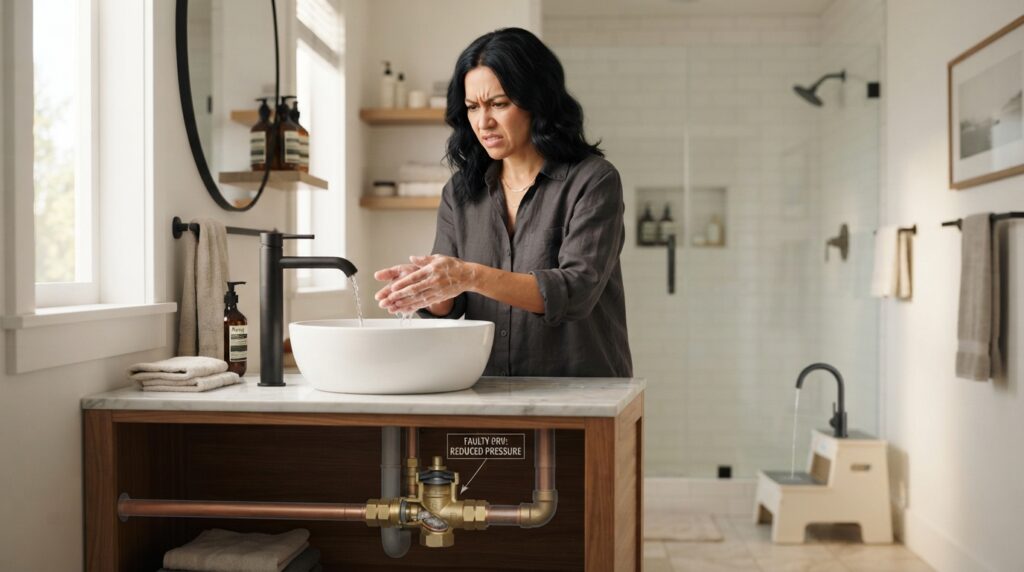
Intermittent low water pressure from a failing pressure lowering valve usually has many warning indications. Showers can suddenly vanish, then revert to normal after a few minutes. Faucets throughout the house generally have the same ups and downs, not isolated problems that affect one fixture. Homeowners may discover that washing machines take longer to fill and irrigation systems aren’t working properly. Sometimes the water pressure is okay but when more people in the house are using water, the pressure is substantially reduced. These symptoms typically affect the whole plumbing system because the valve controls water entering the house, not isolated branch lines.
Other Conditions That Produce Similar Symptoms
This behavior is most often caused by pressure decreasing valves but there are a number of other plumbing problems that might induce this behavior. Available water pressure can be reduced by partially closed shut-off valves, mineral buildup inside water supply pipes, blocked faucet aerators, decaying water service lines, and municipal maintenance activities. Hidden leaks in the plumbing can potentially steal water from fixtures, especially if the leak increases at greater operating pressures. Sometimes, constraints in the water heater only affect hot water flow, causing pressure discrepancies between hot and cold fixtures. Considering these alternatives and the condition of the pressure reduction valve will help make a correct diagnosis before any repairs are attempted.
Techniques for Measurement of Pressure Changes
The first step in a proper diagnosis is to measure the water pressure with a pressure gauge linked to an accessible hose connection or plumbing fixture. And measuring the pressures at different times of the day and under different household water needs shows a consistent management. If the municipal supply is stable, but the pressure fluctuates considerably, then the pressure reduction valve is a potential source of the problem. Further evidence of internal deterioration can be obtained by inspecting the valve for corrosion, mineral deposits, or exterior leakage. It can assist identify if the device is functioning properly or permitting abnormal pressure changes into the plumbing system in the home by comparing pressure readings before and after the valve.
Repair and replacement options
Pressure reduction valves have internal parts of precision quality that will wear out with age, after many years of use. While many types allow limited modification or replacement of particular internal elements, total valve replacement frequently gives the most reliable long-term solution once intermittent pressure regulation arises. A correctly sized replacement valve will restore consistent water pressure and safeguard the plumbing system from excessive municipal supply pressure. Plumbers often check neighboring shutoff valves, pipe connections and pressure gauges during replacement to see if any other variables are causing pressure changes. Proper installation and adjustment will also help to prolong the life of linked plumbing fixtures and appliances, and will help to maintain a regular flow of water throughout the property.
Preventing Future Pressure Issues
Long-term plumbing reliability depends on frequent inspection and repair of the home’s water pressure control system. By periodically checking the home water pressure, you can catch problems while they are still forming, before you start to experience any significant performance concerns. In hard water areas , water treatment technologies that decrease mineral deposits that can interfere with the operation of valves are beneficial . Routine inspection of fixtures, shutdown valves, and exposed pipes might find early corrosion or leaks which might put pressure stability at risk. This also helps lessen the chances of widespread plumbing problems by replacing outdated pressure reduction valves before they break completely. Those familiar with the effects of failing pressure reducing valves on intermittent low water pressure will be able to identify early system performance changes, restore reliable water flow, protect residential plumbing components, and keep the entire residential water distribution system functioning efficiently.