Why Dishwasher Sump Basins Retain Standing Water Despite Clean Drain Filters and Hoses
Why Dishwasher Sump Basins Retain Standing Water Despite Clean Drain Filters and Hoses
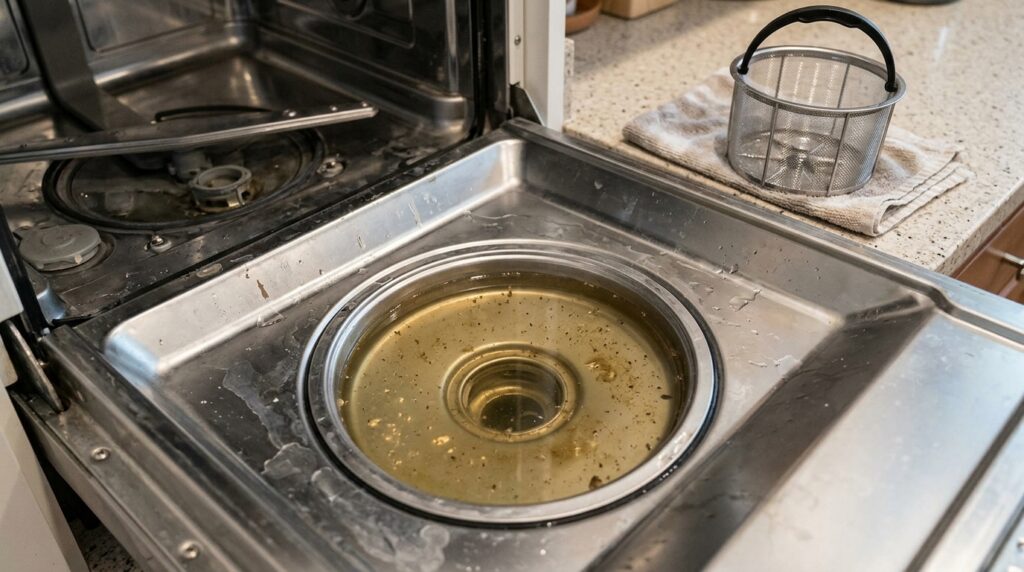
Few household concerns are more aggravating than opening a dishwasher after a full cycle only to find a pool of murky water at the bottom of the tub. You’ve taken the filter out of the drain, flushed it with the tap, made sure that the drain hose is clear of kinks and blockages, but you still have water pooling in the sump basin. This is a more prevalent problem than most homeowners know, and rarely points to a single cause. Sometimes a little water is quite natural but sometimes it can mean a malfunctioning drain pump, a jammed check valve, a clogged disposal intake or an electronic failure. Knowing how the sump basin works makes it easier to distinguish between harmless residual water and a real drainage breakdown. Catching the issue early might save you from smells, mold growth and damage to your kitchen.
This is what a normal amount of water in the sump looks like
So before you think that something is damaged, it is good to know that many dishwashers are designed to leave a bit of water in the sump basin after every cycle. And that little bit of water left in the line , generally no more than a cup or so , keeps the drain pump seals lubricated , so they don ’t dry out and crack over time . In certain designs it also works as a water trap to prevent sewage odors from rising into the tub. If the water stays in the lowest recessed region around the filter and does not reach the bottom spray arm or cover the heating element, then the appliance is probably performing as it should. The water is in trouble when the water level goes above the sump bottom, looks hazy with food particles, or smells bad. Those symptoms indicate that the machine isn’t finishing its drain cycle and the standing water is a symptom, not a design feature.
How the Sump Basin and Drain Pump cooperate
The lowest part of the tub is the sump basin, where water accumulates after it has gone around and around the spray arms and the filter assembly. The drain pump, or a drain mode of a combined motor, pulls water out through the drain hose and the circulation pump pushes water upward for washing. The control board tells the drain phase when to do its thing at certain times in the cycle. The pump must spin freely and create adequate pressure to push water over the high loop under the counter top. A clean filter simply means that the initial part of the path is clean. The pump chamber, outlet port, check valve, hose, and household plumbing connection must all function properly downstream of the pump. A fault in one of them can leave water behind even when all the exposed bits seem clean.
Drain Pump Impeller Issues That Hide Behind a Clean Filter
One of the most neglected causes is right under the filter, in the pump chamber. Small pieces of broken glass, pits of olives, bits of toothpick, bottle caps, and bits of label can go through the mesh of the filter, especially if the filter has been left slack and then stuck into the drain pump impeller. If the impeller is stuck or chipped it may hum but not move much water, or it may spin freely with almost no pressure created. In older machines, worn pump bushings and a weakening motor cause the same delayed, incomplete drain. A simple test is to shine a flashlight into the sump opening and listen carefully when the drain cycle starts. Constant hum indicates that the motor is operational but the impeller is blocked or worn out, whereas utter quiet usually indicates an electrical failure in the pump upstream.
Check Valves and Drain Valves That Do Not Release Water
Many models have a check or flap valve at the pump exit, which prevents unclean water from pouring back into the tub when the pump stops. The valve can get sticky from oil, detergent residue or mineral scale and may hang half open and enable wastewater to drain back into the sump. It could also not open completely and restrict the outflow . This results in water being left after the cycle is complete . Some machines work using a drain solenoid or motorized drain valve that opens only when powered, thus a weak coil or a jammed plunger can prevent water from escaping altogether. They are sitting behind the pump housing or under the tub so they are easy to miss during a typical cleaning. Hard water homes are more prone to this problem and periodic descaling cycles can help to reduce the build-up of minerals inside these tiny passages.
Blockages in the Disposer Drain and Air Gap
Once the filter and hose are clean, the next suspect is the connection to the domestic drain system. A new trash disposal may have a knockout plug in the dishwasher inlet port, and if that plug was never removed, water can’t get out of the machine. Even without a plug, food waste will pile down into the disposal intake during months of use, progressively narrowing the hole. A slow drain that seems like a pump failure might also be caused by a countertop air-gap fitting getting clogged with sludge. If there is no suitable high loop or if the drain line is connected to a partially clogged sink trap, wastewater may be siphoned back into the tub. If you run the disposal empty and clear the air gap cap and test the hose flow into a pail, you’ll soon narrow down the issue.
Sensor, float switch, Control board faults that appear to be clogs
Not all drainage complaints arise from a physical blockage. Most modern dishwashers use a float assembly, pressure switch or turbidity sensor to determine if the tub is full or empty. If the float gets stuck or the little air tube that goes to the pressure switch is blocked or damaged, the control board can think the water level is wrong and cut the drain phase short. A bad relay on the control board can also cut power to the drain pump just when it needs it most. These electronic flaws sometimes manifest themselves as intermittent activity, such as a cycle that drains fine one day and fails the next, or error codes flashing on the display. Before you start changing any mechanical parts, look up the problem code for your model, it’s a good early diagnostic step.
Slow Leaks of Inlet Valves and Cracked Housing that Continually Refill the Tub
Sometimes the sump is full of standing water. Not because it would not drain, but because something is adding water to the system. A water inlet valve that doesn’t close completely will let a sluggish stream of water into the tub even when the machine is off, and this will slowly fill the sump overnight. You’ll usually notice this most in the morning when you realize there’s more water in the tub than when the last cycle ended. A fractured sump housing or a worn gasket between the sump and the pump might also cause the pump to pull air instead of water, which lowers drain pressure and leaves liquid behind. Wet insulation, staining inside the cabinet below, or a musty stench under the unit may be indications of this type of problem. Persistent leaks can damage flooring and cabinets, so they need to be fixed promptly.
Practical steps to troubleshoot and when to call a technician
Systematic approach saves time and money . First, turn off power and remove the bottom rack and filter. Soak away the standing water with a towel or cup so you can see the sump floor and pump opening with a flashlight. Look for glass or other hard debris and make sure the filter is seated firmly. Run a short drain cycle and listen to the pump. Next check that the disposal knockout plug is removed, the air gap is clean and the hose has a correct high loop. If you have water left, check hose flow into a bucket to distinguish pump difficulties from home plumbing problems. Many owners can handle replacing a drain pump or check valve, but control board failures, wiring testing, and recurring leaks are better left to an experienced appliance expert.