The Insulation Recall: Why New Home Inspections Are Finding Wrapped Batts Left in Roof Cavities
The Insulation Recall: Why New Home Inspections Are Finding Wrapped Batts Left in Roof Cavities
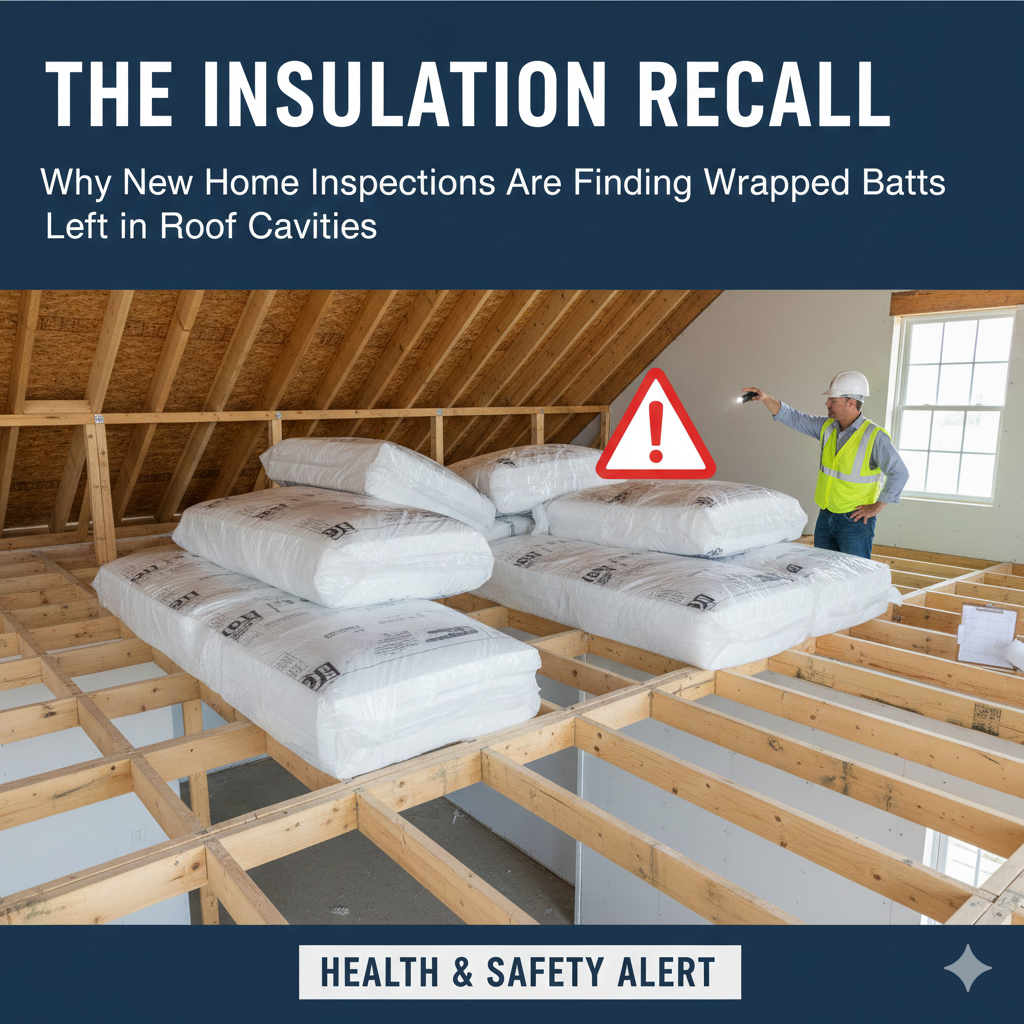
Recent years have seen an increase in the number of new home inspections that have revealed a building flaw that is surprisingly widespread but that many homeowners never anticipate seeing in newly constructed homes. Insulation batts are regularly found by inspectors still wrapped in their original plastic packing and left within roof cavities, leaving them almost unusable. This is a common occurrence. The issue at hand is not limited to a lack of quality craftsmanship; rather, it is indicative of more fundamental problems in building procedures, hurried timetables, and an absence of adequate monitoring. Homeowners have the misconception that newly constructed homes are up to date with contemporary energy requirements; yet, these concealed flaws may subtly raise energy expenses and decrease the level of comfort within the home. In addition, secondary issues that are far more costly to solve might be caused by moisture that is retained and ventilation that is inadequate over time. It is crucial for anybody who is constructing, purchasing, or inspecting a new house to have a sound understanding of the reasons why this occurs. The severity of this problem has intensified to the point that it is now being regarded as a component of a more comprehensive insulation recall concern. A homeowner’s ability to preserve their investment and demand greater building quality may be improved by having an understanding of the reasons behind it.
Acquiring an Understanding of the Meaning Behind Wrapped Insulation Batts
The purpose of wrapped insulation batts is to provide protection during storage and transportation; they are not intended to be placed while they are still sealed in plastic. After being wrapped in roof cavities for an extended period of time, these batts are unable to efficiently trap air, which is a necessary condition for insulation to function correctly. Heat transfer control is prevented by the plastic covering, which also has the potential to obstruct the natural movement of air in the attic area. Due to the fact that roof cavities are seldom investigated after construction is finished, this error often goes unreported. It is possible that the insulation may either move, compress, or retain moisture with time, which would further reduce its efficiency. Homeowners may find that their rooms are excessively hot during the summer and excessively chilly during the winter without being aware of the underlying reason. It is possible that things that look to be insulation that has been put really provide very little to no thermal protection. Because of this, wrapped batts are a construction flaw that is not obvious but is critical.
Why are new home inspections seeing this problem more often than they used to?
Home inspections in the modern era are far more comprehensive than they were in the past. In order to assess the effectiveness of insulation, inspectors now make use of improved illumination, thermal imaging, and more stringent building industry regulations. Because of this, problems that were previously overlooked are now being brought to light on a daily basis. If an inspector does not physically access roof cavities or make use of temperature-difference equipment, it is quite simple for them to overlook wrapped batts under the roof. The growing awareness of the need of energy efficiency has also prompted inspectors to examine the quality of insulation installation with a greater degree of scrutiny. Buyers are seeking not just visual perfection but also improved performance. The reason why more inspection reports are exposing this issue is because of the enhanced scrutiny that has been applied. This is not because the problem is brand new; rather, it is the fact that it is being found at long last.
One of the Root Causes Consists of Construction Speed and Labor Pressure
The urge to finish dwellings as rapidly as possible is a significant factor that contributes to the repositioning of wrapped insulation batts. Contractors are sometimes required to speed through crucial procedures since builders frequently operate under strict time constraints. Insulation installers may leave batts wrapped temporarily with the idea of returning at a later time; but, due to time constraints and misunderstandings, this may not be possible. There are various instances in which workers with less expertise could not fully see the significance of completely removing the plastic. It is possible for supervisors to presume that the task is finished without doing comprehensive inspections. This mix of speed, weariness, and a lack of monitoring provides the ideal circumstances for errors to occur. Unfortuitously, homeowners are the ones who end up paying the price after the builders have already moved on.
An Analysis of the Effects of Wrapped Batts on Energy Efficiency and Comfort
In order to keep the temperature within a building stable and to cut down on the amount of energy that is used, proper insulation is essential. Batts of insulation see a considerable decrease in their thermal resistance when they are left wrapped. During the winter, heat is able to exit more readily, but during the summer, heat enters the living area more quickly. This results in increased utility costs because it requires heating and cooling systems to work harder than they normally would. Another typical sign of this issue is rooms that have temperatures that are not consistent with one another. It is possible for homeowners to place blame on windows or appliances, but they may be unaware that the true problem resides above the ceiling. It is possible for heating, ventilation, and air conditioning (HVAC) systems to have a shorter lifetime if they do not have enough insulation. A mistake that seems to be little might end up being a significant financial burden in the long run.
Condensation, Moisture, and the Potential for Long-Term Structural Damage
Insulation that is covered in plastic may cause moisture to get trapped within roof cavities, particularly in regions that experience temperature changes. Condensation may happen when warm air comes into contact with colder surfaces, and it can be trapped by the plastic coating on the surface. This moisture has the potential to work its way into wooden buildings, causing them to deteriorate or rot over time. When moist insulation is present, it produces an atmosphere that is excellent for the formation of mold spores, which is another severe hazard. The majority of the time, these problems are not brought to light until they have become serious and costly to fix. Moisture exposure over an extended period of time may cause structural damage, which might put the safety of the property up for debate. Installing insulation in the proper manner from the very beginning is the first step in preventing these possibilities.
Why homeowners seldom become aware of the issue at an early stage
Unless there is a significant problem, the majority of homeowners never access the cavities in their roofs. As a result of the fact that wrapped insulation batts do not create immediate and apparent harm, the issue might continue to exist without being recognized. The slow development of energy inefficiency makes it more difficult to pinpoint the precise source of the problem. There are a lot of individuals who believe that rising energy expenses are typical or who blame the weather conditions. By the time that visible symptoms manifest themselves, it is possible that severe harm has already been done. Because of this delayed visibility, wrapped insulation is one of the most misleading construction defects that may be installed. In order to detect it early, the only viable method is to conduct regular inspections and raise awareness.
The Importance of Quality Control and Building Standards in This Context
There are building regulations in place to guarantee that insulation is put appropriately, but the enforcement of these requirements might vary. During the inspection process of some projects, the structural components are given greater attention than the insulating details. Instead of relying on physical verification, quality control procedures could place an excessive amount of reliance on self-reporting by contractors. When batts that have been wrapped are able to pass through these gaps, they are included into the final housing without being corrected. This problem may be considerably mitigated by using more stringent inspection methods and accountability measures. In general, builders that place a higher priority on quality than speed have fewer faults of this kind. In the end, the most important factor in averting recalls linked to insulation is using constant enforcement.
What Buyers and Homeowners Can Do to Protect Theirselves from Potential Risks
Homeowners and prospective purchasers should always be sure to acquire comprehensive inspection reports that thoroughly include roof cavity inspections. Asking inspectors specific questions about the state of the insulation may assist identify flaws that were previously concealed. When wrapped batts are discovered, fixing them as soon as possible might avoid damage that will last for a long time and excessive costs. New home purchasers should not make the assumption that everything that is done behind the walls is done appropriately. If you take the initiative during the inspection process, you will have the ability to demand repairs before the transaction is finalized. Having awareness is the most powerful weapon that homeowners have against taking shortcuts in building. When it comes to insulating a house, the first step is to ask the appropriate questions and insist on having the installation done correctly.