Why Ceramic Tile Grout Cracks Exclusively Along Plywood Subfloor Seams
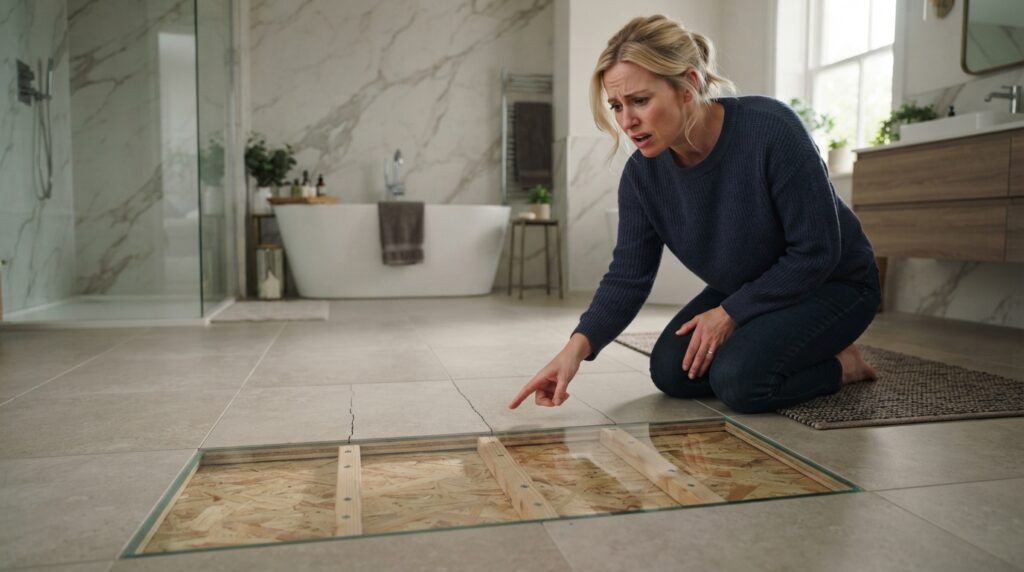
Why Ceramic Tile Grout Cracks Exclusively Along Plywood Subfloor Seams
Ceramic tile flooring is favored for its durability, moisture resistance and long life, making it a popular flooring choice for kitchens, bathrooms, entryways and other high-traffic areas. When built correctly on a sound substrate, tile flooring can last decades in great shape with little upkeep. At other times, however, homeowners will see grout breaking that seems to follow only straight lines matching to the joints of the plywood subfloor under the tile. Cracked grout is typically blamed on shoddy labor or cheap materials, but the real culprit is often slight movement at the joints between neighboring plywood panels. In some cases, a small deflection or expansion of the joints may transmit force upward through the tile assembly to the point where the grout will fracture while the tiles themselves remain undamaged. By understanding why ceramic tile grout fractures only in the seams of plywood subflooring, homeowners may determine the root cause of structural movement, differentiate between cosmetic issues and installation defects and provide lasting repair solutions.
Understanding Underlying Structure of Ceramic Tile
The ceramic tile floor consists of multiple interconnected layers that operate in combination to offer strength and stability. Behind the visible tile and grout lie thin-set mortar, an underlayment or uncoupling layer in most installations, and the structural subfloor. In homes of wood frame construction, the subfloor is often plywood sheets nailed to floor joists. These panels form a continuous surface that supports the final flooring and distributes loads throughout the framework structure. Because of the rigidity of ceramic tile and the relatively limited flexural capacity, the long-term performance is strongly related to the stability of each layer under the tile. Even slight shifts in the subfloor can eventually be seen in the grout joints above.
Why Use Plywood Subfloor Seams?
Plywood is sold in standard sheet sizes and you need more than one panel to cover the floor area of a house. Seams are made at the junctions of two panels to allow for a little expansion and contraction as humidity fluctuates throughout the year. Builders leave tiny gaps between panels on purpose so they don’t buckle when the wood expands. These gaps are required , but they also mean that the floor assembly may behave a little differently at these locations than in the solid portions within each sheet . If this movement is transferred through the tile installation, the grout directly over these seams is typically the first apparent component to show stress.
How Season Wood Movement Affects Tile Floors
Wood expands when the air is humid and shrinks when the air is drier. It’s naturally responsive to variations in moisture. Plywood does go through these dimensional changes in width and thickness, although to a lesser extent than solid lumber due to its designed construction. The seams of adjacent panels in each sheet may expand or contract independently depending on the local moisture conditions. Such minor variances induce localized movement under the tile assembly. The movement is usually too tiny to damage the plywood itself, but the hard grout above won’t take repeated expansion and contraction forever. Hairline fractures will commonly form in the panel joints where tension is concentrated, sometimes immediately over the panel joints, over several seasonal cycles.”
Why does grout crack first?
Grout is generally more brittle then ceramic tile and less able to absorb movement in the flooring system. If the tile installation is a little deflected or expanded, the weak link in the assembly is the grout joints. The grout breaks and the tension is not transferred through the tile, releasing the built-up pressures. Most homeowners notice crumbling grout all the time, but the tiles around it are still firmly glued in place and undamaged. If you have cracked grout but the tiles themselves are intact, it usually means something is going on underneath, not that the ceramic tile has failed.
Installation-Related Cracks
Natural wood movement is a factor, but how the tile is installed will have a lot to do with whether or not the grout cracks later on. If the subfloor is too thin, there can be too much flex between floor joists, which can increase stress at the seams of the plywood. More movement can occur between adjacent panels if plywood joints are improperly staggered or if fastening is inadequate. If you do not have the right tile underlayment or uncoupling membrane, structural movement will transfer directly into the completed tile surface. Lack of mortar covering under the tiles might also create unsupported areas that will flex with typical foot usage. When combined with seasonal wood expansion, these factors make grout cracking at the underlying panel seams particularly likely.
Identifying the Pattern of Structural Movement
The cracks in plywood seam grout have a particular pattern that can assist separate it from other flooring problems. The cracks are usually long, straight lines and not random fissures all over the floor. Their locations are often quite similar to the pattern of the plywood panels beneath the tile. Home owners will note that during dry seasons the cracks open up a bit and during humid seasons they aren’t so obvious. Tiles next to the fissures generally remain level and firmly attached, with no hollow-sounding tiles or appreciable movement. Such uniform characteristics imply movement associated with the substrate rather than separate tile installation errors.
Finding the Root Cause
Where you do have access to the frame or have a copy of the construction drawings, an accurate diagnosis begins by comparing the location of the visible grout cracks to the known pattern of the plywood subfloor. Looking at the floor from below through a basement or crawl space could point to panel seams, poor fastening or excessive joist deflection. Moisture testing can indicate if the wood is repeatedly expanding and contracting because of seasonal fluctuations in humidity. Additional clues as to the source of the problem are in measuring the thickness of the subfloor and whether there is an underlayment, as well as the state of the tile installation. Identifying the structural source of the crack before fixing the cosmetic part will avoid cracks repeating once cosmetic repairs are done.
Prevention of Future Grout Cracking
Limiting movement in the floor system prior to laying ceramic tile is important to prevent long term problems. Proper spacing of fasteners, a plywood sheet of sufficient thickness, and properly staggered panel joints provide a more robust base for hard flooring materials. High quality cement backer boards or uncoupling membranes assist separate tile from small structural movement occurring beneath the surface. Maintaining stable humidity levels indoors also helps prevent seasonal expansion and contraction of wood frame. In renovations, stiffening flexible floor systems prior to tile installation significantly reduces the chance of future grout failure. Regularly inspecting the flooring allows small fractures to be fixed before moisture gets into the layers underneath. Learn why ceramic tile grout cracks only at the seams of the plywood subfloor beneath, so you can appreciate the relationship between unseen structural movement and visible surface damage, and repair the problem more effectively to preserve the appearance and long-term durability of your tile flooring for years to come.