Diagnosing Yellow Water Stains on Ceilings When There is No Bathroom Above
Diagnosing Yellow Water Stains on Ceilings When There is No Bathroom Above
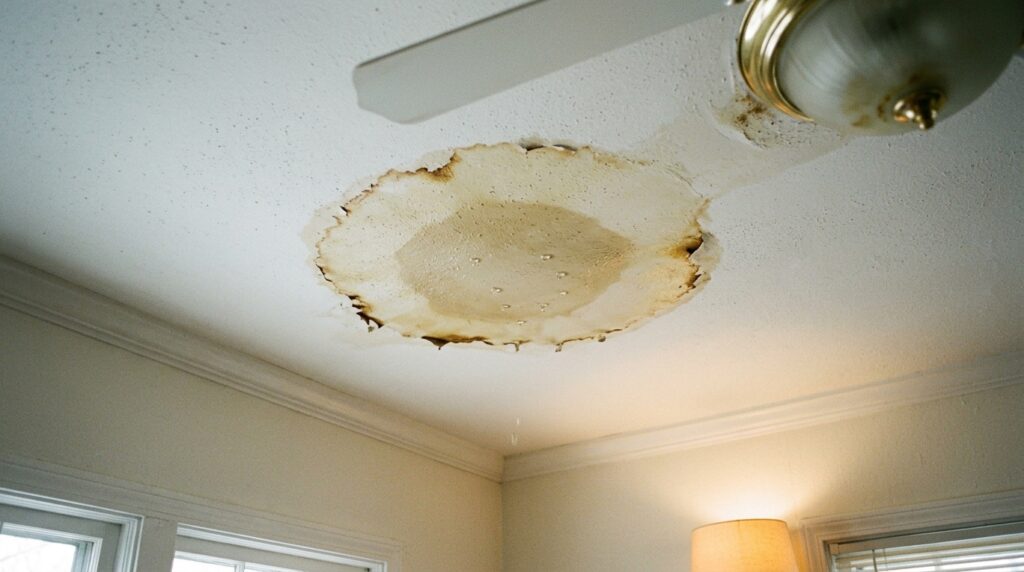
The appearance of yellow water stains on a ceiling might be concerning, particularly in situations when there is no restroom or evident water source right above the region that is showing the staining. In spite of the fact that this often causes homeowners to believe that the issue is unconnected to plumbing, the fact of the matter is that ceiling stains are virtually always caused by moisture incursion from some sort of water movement. The yellowish discoloration is often an indication that water has been present for a sufficient amount of time to breakdown and move organic elements through drywall or plaster, leaving behind visible staining when the water evaporates. It is possible for water to migrate from roofs, HVAC systems, or concealed plumbing lines even in the absence of a restroom located above. In order to effectively diagnose and resolve the problem before it becomes more severe, it is vital to have a solid understanding of the indirect paths that moisture takes.
Leaks in the roof and other concealed water entry points
A roof leak is one of the most prevalent causes of ceiling stains in residential buildings that do not have an above bathroom. In order for water to reach the ceiling, it must first travel along the structural beams and then enter the building via broken shingles, fractured flashing, or degraded roof seals. Due to the fact that water travels along the route of least resistance, the actual entrance site is sometimes located a considerable distance away from the location where the stain is visible. Because of this, roof leaks are especially susceptible to deception and are difficult to assess visually. Repetitive exposure to rain or moisture may, over the course of time, cause the leak to become more extensive and spread the discoloration over a larger portion of the ceiling surface.
Condensation in the Spaces of the Attic
Even if there are no leaks that are directly visible, condensation in the attic may still produce moisture that ultimately makes its way down to the ceiling below. Warm air from the inside of the house rises into the attic, where it collides with colder surfaces, which results in the condensation of water vapor. It is possible for this moisture to build and drop downhill over time if the attic does not have enough insulation or if it does not have adequate ventilation. By increasing the temperature disparities between living rooms and attic regions, this process is more typical during the winter seasons, when indoor heating is more prevalent. The ensuing moisture has the potential to seep into the materials of the ceiling, causing yellow stains to appear even in the absence of any obvious damage to the roof.
Leaks in the HVAC System and Condensation in the Ducts
The formation of condensation on ducting may also be a contributing factor in the formation of ceiling water stains caused by heating and cooling systems. Moisture tends to accumulate on the surface of air conditioning ducts that run through attics or ceiling cavities because these ducts often transport cold air through warm surroundings. It is possible for water droplets to begin forming around these ducts and ultimately leak onto the ceiling below if the insulation that surrounds them is either inadequate or broken. Small leaks in the drain lines or drip pans of HVAC systems may also be a source of gradual and concealed moisture collection in certain circumstances. In many cases, these problems are sporadic, which makes it impossible to identify them without conducting a thorough investigation.
Water Supply Lines Extending Beyond the Bathroom Areas
It is possible for plumbing lines associated with heating systems, kitchens, and laundry rooms to run through ceiling spaces even in situations when there is no bathroom located above. When these pipes have a slow leak, it may cause the discharge of little volumes of water over time, which then gradually spreads through the materials that make up the ceiling. Due to the fact that the rate of leakage is often minimal, there may not be any obvious dripping but rather gradual discoloration. The fact that these concealed leaks may go undetected for extended periods of time makes them especially hazardous. This can result in the weakening of the structure and the growth of mold inside the cavities of the ceiling.
The Ways in Which Water Transports and Causes Distant Stains
Not all instances of water dripping straight downhill from its source are the same. It is possible for it to move horizontally over wooden beams, insulation, or layers of drywall before it becomes evident. This indicates that the yellow stain may still be visible many feet distant from the actual source of the leak. There are a number of factors that impact the way water spreads inside ceiling structures, including gravity, surface tension, and the materials used in construction. As a consequence of this, the apparent stain is often merely the most recent site of accumulation and not the initial point of accumulation. Consequently, rather of relying merely on the location of the stain, an effective diagnosis is based on following the courses that moisture takes instead.
Establishing the Nature of the Stain and the Course of Its Development
For diagnostic purposes, the appearance of the stain might give vital information. In most cases, stains that are light yellow indicate that the moisture exposure was modest and sporadic. On the other hand, stains that are deeper brown or spreading indicate that the water incursion was continual or more severe. It is possible that ring-shaped patterns are an indication of recurrent cycles of wetting and drying. Rather than indicating a problem that occurred in the past, a stain that increases over time is often indicative of an ongoing leak. The monitoring of these shifts is helpful in determining whether or not the situation has reached a stable state and whether or not quick action is necessary.
Inspections for moisture and the detection of concealed damage
It is possible to apply simple testing procedures to evaluate the affected region in order to verify the existence of active moisture. By applying little pressure to the ceiling, it is possible to discover soft places that are indicative of defective drywall. In spite of the fact that the surface may look dry, moisture meters are able to detect a higher water content. In more complex situations, thermal imaging may be utilized to assist in determining temperature changes that are brought on by concealed moist patches. These diagnostic procedures assist differentiate between stains that have been there for a long time and leaks that are still occurring, which is essential for planning suitable repairs.
Understanding Why Ignoring Ceiling Stains Can Result in More Serious Issues
Yellow ceiling stains are not only a matter of aesthetic concern; they often indicate continuing water damage that has the potential to become more severe over time. The presence of persistent moisture may cause structural components to become brittle, encourage the development of mold, and reduce the efficiency of insulation. When left unattended, even little leaks have the potential to grow and spread to bigger portions of the ceiling or the walls that surround it. The growth of mold is particularly troubling since it has the potential to spread into spaces that are not visible, making it more difficult to remove in the future. The early detection and repair of damage is vital in order to avoid damage that will last for a long time and expensive restoration work.
Instructions on How to Identify and Address the Root Cause of the Issue
Identification and removal of the moisture source is the first step in the process of removing stains from ceilings. As part of this process, it may be necessary to check for damage on the roof, examine the ventilation in the attic, or check for leaks in the plumbing and heating and air conditioning systems. It is necessary to wait until the damaged area has completely dried up before doing any cosmetic repairs once the source has been fixed. In some circumstances, it may be necessary to seal or replace discolored drywall in order to prevent the discoloration from occurring again. In order to achieve a comprehensive and long-lasting treatment, it is necessary to address both the source and the apparent harm.
The Prevention of Water Stains on Ceilings Over the Long Term
A routine examination and maintenance of all possible sources of moisture is required in order to prevent additional stains from occurring. Maintaining the integrity of the roof, ensuring enough ventilation in the attic, and installing insulation for heating, ventilation, and air conditioning all help to limit the likelihood of concealed water accumulation. Keeping an eye out for any early indications of discoloration on ceilings enables prompt intervention before the damage becomes more widespread. In addition, ensuring that the humidity levels inside are steady helps avoid problems that are associated with condensation. By performing routine maintenance and paying close attention to the details, homeowners may easily avoid yellow ceiling stains and safeguard their property from water damage that is not immediately apparent.