Why the Grout in Your Shower Floor Keeps Cracking Months After Being Repaired
Why the Grout in Your Shower Floor Keeps Cracking Months After Being Repaired
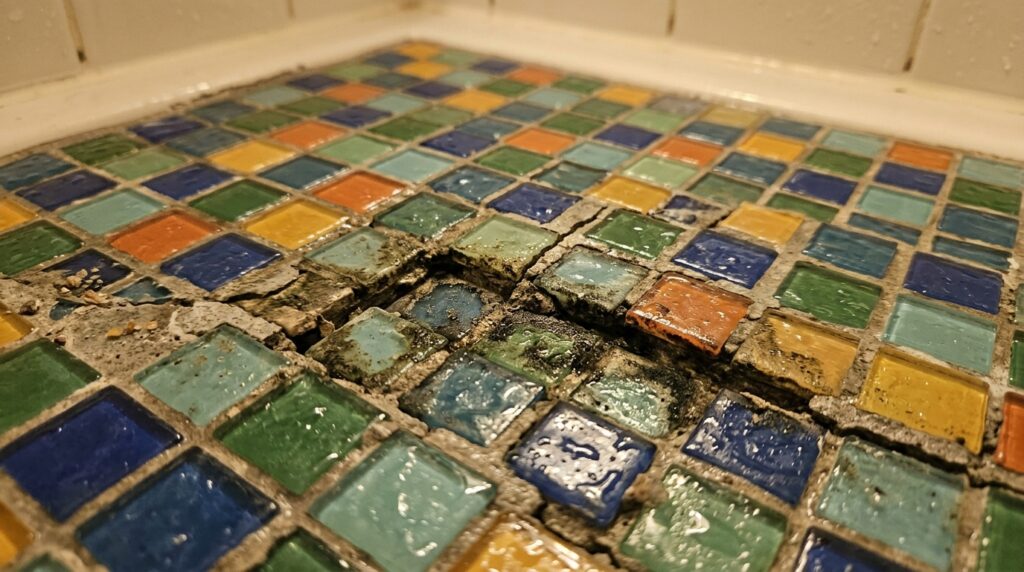
Cracked grout on a shower floor that continues to occur even after repeated repairs is an indication that the fundamental problem is not the grout itself but rather the movement, moisture behavior, or structural issues underneath the tile surface. The floors of showers are one of the most demanding tiled surfaces in a house since they are continually subjected to water, fluctuations in temperature, and physical stress. The failure of grout over and over again is an indication that either the substrate is unstable, the installation process is incorrect, or moisture is continually impacting the tile assembly from below. The simple act of reapplying grout without addressing the underlying reason often results in many cracks appearing within a few of months.
How the Movement of the Shower Floor Brings About Grout Failure
Grout is a substance that is inflexible, but shower floors naturally suffer some movement owing to environmental factors such as temperature variations, foot activity, and the absorption of water. When the surface under the grout lines moves even slightly, the grout lines absorb the load and ultimately break as a result of the movement. Homeowners who have tiles laid over an uneven surface or whose subfloor or mortar bed has a little degree of flexibility are more likely to experience this issue. Due to the fact that grout does not possess any degree of flexibility, it becomes the weakest point in a system that is subject to continuous motion. Over the course of time, recurrent stress cycles may lead to fractures that occur repeatedly in the same places.
An Overview of the Improper Role of Subfloor Support
A solid and firm basis, such as a mortar bed or cement backer system, is necessary for the construction of a shower floor that is aesthetically pleasing. In the event that the subfloor underneath the tile does not have enough strength, it may bend when subjected to weight. Due to the fact that this movement is transferred straight to the grout lines, the grout lines continue to break even after they have been repaired. In many instances, the problem stems from inadequate structural support throughout the installation process rather than failure at the surface level. Following the compromise of the base layer, there is no amount of grout restoration that can permanently remedy the issue without first addressing the instability that lies under the surface.
The Infiltration of Moisture Under the Tiles
Another key factor that contributes to grout cracking again and over again is water penetration. As a result of the continual exposure of shower floors to water, moisture may leak into the substrate if the waterproofing layer that lies underneath the tiles is either broken or inadequate. The adhesives become less effective as a result of this trapped moisture, which also causes the materials underneath the tile to undergo modest expansion and contraction. With the movement of these materials, the grout lines that are above them start to break. Inadequately sealed joints or even little leaks from corners may progressively cause the whole floor assembly to become unstable.
Changes in temperature cause expansion and contraction of the material.
Shower floors are subjected to repeated temperature variations as a result of the exposure of hot water, which is then followed by periods of cooling. Both the tile and the substrate materials experience a modest expansion and contraction as a result of these cycles. Stress may accumulate along grout lines if the grout that was used is not sufficiently flexible or if expansion joints were not correctly included into the composition of the grout. Cracking gives way to the discharge of this tension over time. This is particularly prevalent in bathrooms, which are designed to accommodate showers that are used often throughout the day, which increases the intensity of thermal cycling.
Inappropriate Mixing Ratios or Poor Grout Selection as the Cause
Not all grout is appropriate for use in applications involving shower floors. Instead of using a flexible or high-performance formulation, regular grout is more likely to break when subjected to pressure. This is because standard grout is not as flexible. A further factor that might weaken the final cured product is the use of inappropriate mixing ratios during the application process. Brittle grout that is unable to tolerate normal movement occurs when there is an excessive amount of water present during the mixing process or when the curing conditions are not appropriate. In spite of the fact that the surface may initially seem to be in good condition, structural flaws may emerge and result in an early collapse.
Concerns Regarding the Installation of Tiles and Vacuites
When there is an uneven distribution of glue during the installation process, hollow patches might appear underneath tiles. Due to the presence of these voids, weak areas are created when tiles are not entirely supported. Due to the application of weight, the tile may somewhat bend into these hollow places, causing the grout that surrounds it to become stressed. Repeated stretching like this causes fractures to develop in predictable patterns over the course of time. In many instances, grout repairs are unsuccessful after being attempted several times because the underlying tile installation fault was never addressed.
Concerns Regarding Drainage and the Effects of Water Pooling
Poor drainage is another factor that might lead to the degradation of grout. It is possible for some portions of the shower floor to become more exposed to moisture if water pools in such regions on a regular basis. Continuous soaking causes grout to deteriorate over time and speeds up the process of disintegration. Additionally, water that is trapped may seep into tiny fractures and expand when the temperature changes, which can make the damage that is already there much worse. When it comes to preserving grout stability over the long run, proper slope and drainage are very necessary.
Why Surface Repairs Do not Last Longer When Done Alone
Reapplying grout without addressing structural or moisture concerns is merely treating the symptom; it does not address the underlying cause of the problem. It is possible that the surface may look mended briefly; nevertheless, the underlying stress causes will not alter. Because of this, fractures tend to resurface in the same places after a very short amount of time. For a repair to be successful, it is necessary to determine if the problem is caused by movement, dampness, installation errors, or a combination of these things. Without addressing the underlying problem, failure will continue to occur practically without fail.
Guidelines for Making an Accurate Diagnosis of the Root Cause
When attempting to diagnose recurring grout cracking, it is necessary to examine the tiles for movement, listen for hollow noises when striking the tiles, and look for indications of moisture under the surface. It is possible to determine if the problem is structural or environmental by observing whether fractures form in precise patterns or in random spots. The removal of a part of tile may be required in certain circumstances in order to conduct an inspection of the condition of the substrate and the waterproofing layer. Before making any attempts at lasting repairs, it is necessary to get an accurate diagnosis.
Solutions that are Effective for Long-Term Repairs
When it comes to long-term repairs, most of the time, regrouting is not enough. In the event that movement is the problem, it may be essential to either reinforce or replace the subfloor. There is a need to either repair or replace damaged waterproof membranes in order to prevent moisture from entering the system. With the aid of flexible grout or alternatives based on epoxy, it is possible to accept smaller movements. When the situation is serious, it may be necessary to replace the shower floor in its whole or in part in order to guarantee its stability. Addressing structural as well as moisture-related concerns is essential in order to avoid a recurrence of the problem.
Addressing the Issue of Grout Cracking in Shower Floors in the Future
In order to prevent cracking in the future, it is necessary to ensure that the installation foundation is sturdy, to waterproof it appropriately, and to use the appropriate materials. It is important to maintain constant drainage in order to minimize water collection, which may eventually cause grout to become weak. The use of grout materials that are flexible, of good quality, and suitable for use in damp conditions increases the grout’s longevity. It is helpful to do regular inspections of grout lines in order to detect early symptoms of wear before serious cracking develops. Even though it is constantly exposed to water and movement, shower floor grout may be made to stay stable and long-lasting throughout time if the appropriate construction and maintenance techniques are followed.