Why Your Dimmer Switch Buzzes When Turned Down (And When It’s a Fire Hazard)
Why Your Dimmer Switch Buzzes When Turned Down (And When It’s a Fire Hazard)
A dimmer switch that makes a buzzing sound may be both unpleasant and frightening, particularly when the buzzing becomes more obvious as the light level decreases. Many homeowners are under the impression that it is a significant electrical problem; nevertheless, the majority of the time, the noise is associated with the way that dimmer switches manage electricity. By quickly switching electrical current on and off, modern dimmers are able to control the brightness of the light. This process might cause vibrations to occur inside the switch itself or within the light fixture that is linked to it. Even while a little hum is often deemed to be acceptable, buzzing that is greater in volume or that becomes worse may indicate compatibility concerns or underlying electrical problems. If you choose to disregard these warning indications, it may result in decreased performance, a shorter lifetime for the bulb, or even serious safety issues. It is necessary to have an understanding of the reasons behind the buzzing of dimmer switches and the point at which the noise becomes harmful in order to keep your house comfortable and safe from electrical hazards.
Controlling the Output of Light Through Dimmer Switches
Dimmers are a kind of switch that, rather than merely turning a light fixture on or off, adjust the amount of power that is flowing to the fixture. To lessen the amount of power that is delivered, they use a technique known as phase-cutting, which, in essence, involves chopping up portions of the electrical waveform. It is possible to make a smooth adjustment to the light intensity thanks to this quick switching that takes place several times per second. On the other hand, this procedure has the potential to generate minute vibrations in electrical components, particularly contained inside the switch or the bulb. There is a possibility that these vibrations may turn into a buzzing sound that can be heard, especially when the dimmer is adjusted to lower levels, which causes the waveform to be changed more significantly.
For what reason does buzzing occur at lower light levels?
The electrical current is being interrupted more forcefully when the lights are dimmed, which is why buzzing is often more visible when the lights are lowered. At lower settings, the dimmer cuts a bigger percentage of the electrical waveform, which increases the possibility of vibration in both the switch and the light fixture. This is because the switching mechanism is more sensitive to vibrations. Especially if they are not meant to interact with dimmers, some kinds of bulbs have the ability to magnify this impact because of their design. It is possible for resonance to be produced as a result of the interaction between the dimmer circuitry and the internal components of the bulb. This resonance may be heard as a buzz or haze. The reason for this is that when the light is adjusted to its maximum brightness, the noise may vanish entirely or greatly decrease.
Not compatible with the dimmer switches and light bulbs
Utilizing bulbs that are not compatible with a dimmer switch is one of the most typical reasons for an excessive amount of buzzing heard. It is usually true that traditional incandescent bulbs are compatible with the majority of dimmers; however, newer LED and CFL lights need particular designs that are compatible with dimmers. There is a possibility that a non-dimmable bulb may create significant noise, flickering, or uneven brightness when it is used in conjunction with a dimmer. Using dimmable LEDs in conjunction with an unsuitable or obsolete dimmer control might result in performance concerns, even if the LEDs themselves are dimmable. In order to get rid of unwanted noise, it is essential to make sure that the bulb and the dimmer are built to function together.
Wiring and electrical connections that are not secure
Another factor that may be contributing to a buzzing dimmer switch is wire that is either loose or not properly secured. It is possible for the passage of electricity to generate minor arcs or vibrations inside the wire if the connections between the electrical components are not secure. This is not only a source of noise, but it also has the ability to create heat, which is a possible threat to physical safety. The chance of an electrical breakdown may increase as a result of these weak connections, which may become more severe with time. When dealing with electrical systems, it is important to take precautions and adhere to the appropriate safety protocols. Inspecting and tightening connections inside the switch box may often remedy the problem.
Capacity of the Dimmer Switch Being Overloaded
Each and every dimmer switch has a maximum wattage rating, and exceeding this limit might result in performance issues, like buzzing or other undesirable sounds. By connecting an excessive number of bulbs or fixtures with a high wattage to a single dimmer, the dimmer gets overloaded. It is possible that this pressure on the circuitry could lead it to overheat and increase its vibration, which will ultimately result in a louder hum. Overloading not only has an impact on performance but also reduces the amount of time the dimmer will remain functional. The calculation of the total wattage of the connected bulbs and the verification that this wattage is within the dimmer’s rating are both necessary for the safe functioning of the device.
If Buzzing Is Considered a Potential Fire Hazard
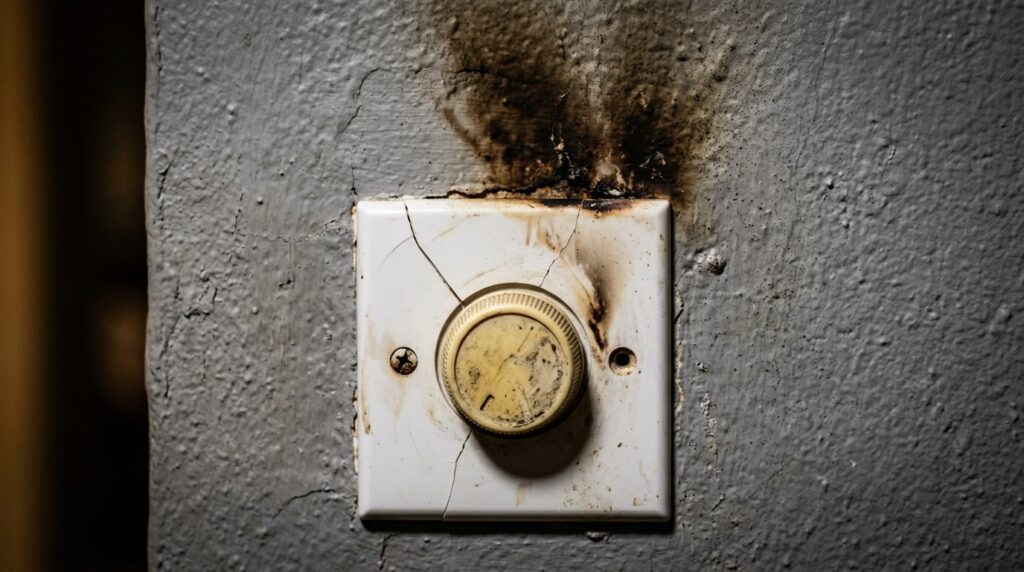
There are specific indicators that signal a more severe problem that might represent a fire threat, even though a slight hum is normally considered to be innocuous. Warning indications that should not be disregarded include a loud buzzing sound, a smell of burning something, an excessive amount of heat coming from the switch, or apparent flickering. Wiring that is not functioning properly, internal damage to the dimmer, or an overloaded circuit might be the cause of these symptoms. In these kinds of situations, continuing to utilize the switch might make the danger of electrical fires an even greater concern. In order to avoid possible dangers, it is vital to take immediate action, such as shutting off the circuit and checking the system.
The Implementation of Contemporary Dimming Technology
Older dimmer switches are sometimes not built to manage the electrical properties of current LED lights. This is frequently the case. It is possible to considerably decrease or eliminate buzzing by upgrading to a more recent dimmer that is compatible with LEDs. Modern dimmers make use of more sophisticated circuitry, which enables them to manage power in a more seamless manner and achieve greater compatibility with energy-efficient lights. In addition to enhancing performance, these modifications also increase safety and efficiency in terms of energy use. A realistic and long-term answer would be to make an investment in a dimmer of superior quality that is purpose-built for your particular lighting configuration.
Preventative Measures to Ensure a Convenient and Risk-Free Operation
A combination of correct installation, components that are compatible with one another, and routine inspection are required in order to keep a dimmer switch system that is unobtrusive and secure. One of the most important measures in minimizing buzzing is selecting the appropriate bulbs, ensuring that the wiring is safe, and avoiding overloading. Checking the switch on a regular basis for unusual heat or noise may assist in the early detection of potential problems. In the event that these steps do not resolve the issues, it is recommended that you seek the advice of a trained electrician. By implementing these preventative measures, you will be able to enjoy lighting control that is smooth and quiet while also reducing the potential of electrical risks on your property.