The EV Charger Fire Risk: Why Old Residential Panels Can’t Handle New Rapid-Charging Installations
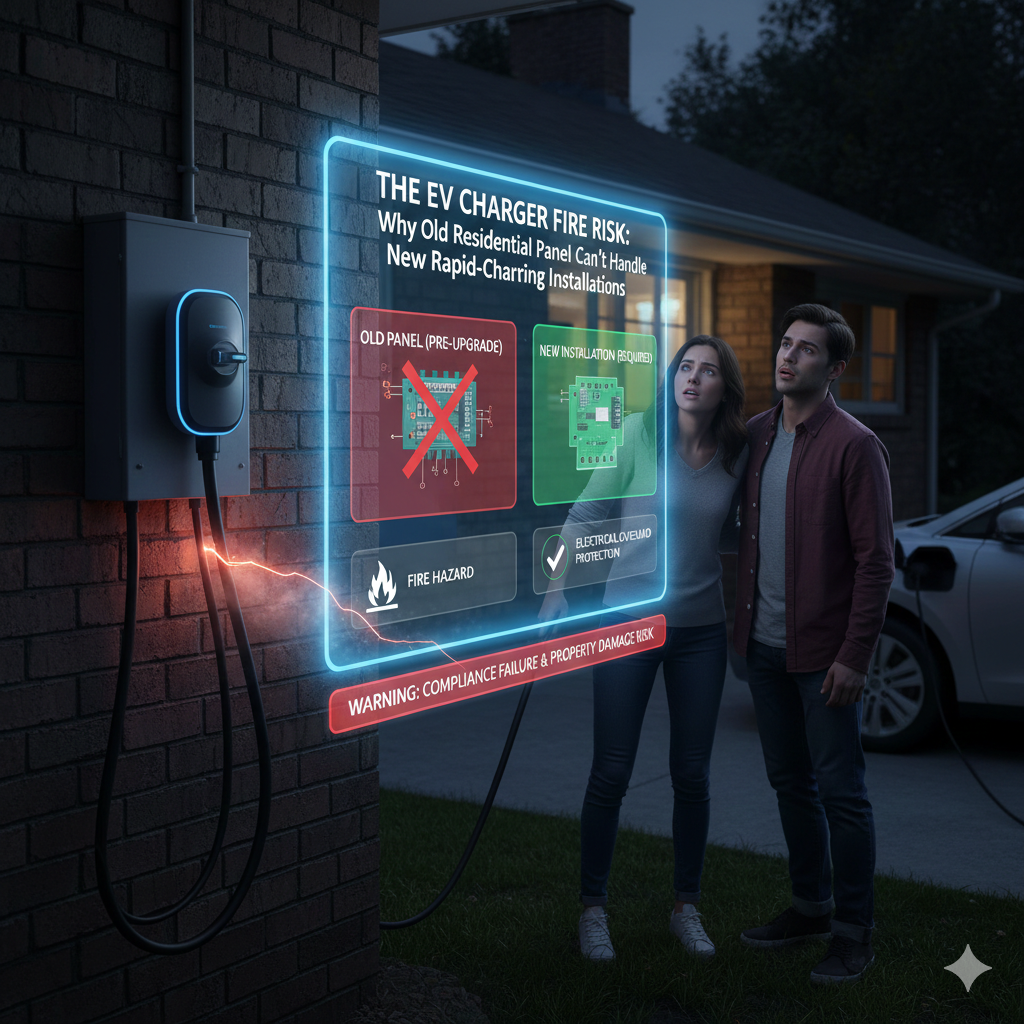
The EV Charger Fire Risk: Why Old Residential Panels Can’t Handle New Rapid-Charging Installations
Homeowners are increasingly installing home charging stations for the purpose of enhancing their comfort and efficiency in light of the fast transformation that electric cars (EVs) are bringing about in the form of transportation. On the other hand, older domestic electrical panels are often not adequately designed to deal with the high power requirements of contemporary rapid-charging equipment. Additionally, the addition of a high-capacity electric vehicle charger may cause circuits to become overloaded, which can result in overheating, tripped breakers, or even electrical fires. These panels were intended to handle ordinary residential loads. There is a possibility that homeowners will not become aware of the danger until they see symptoms of panel stress, such as buzzing sounds, flickering lights, or heated outlets. In order to provide safe support for electric vehicle charging, it is often essential to retrofit panels or upgrade service capacity. The ease of charging equipment at home comes with significant risks to one’s safety if it is not properly planned for. To forestall accidents and guarantee the dependability of electric vehicle usage, it is vital to have a solid understanding of the constraints of the present electrical infrastructure.
The Influence That Rapid-Charging Units Have On Panels
Electric vehicles that are capable of rapid charging use a substantially higher amount of current than typical home appliances. When compared to a typical outlet, which can take 15–20 amps, a charger that is Level 2 or above may need anything from 40–100 amps or even more. There is a possibility that older panels contain wiring that is no longer up to date, inadequate bus bars, or ungrounded circuits that are unable to properly sustain this load. In addition to causing breakers to trip more often, the strain may also cause electrical components to deteriorate over time. If the panels are not improved or replaced, they might create fire dangers if they are overloaded. Recognizing the distinction between conventional charging and high-capacity charging is essential for ensuring compliance and ensuring overall safety.
Manifestations of an Electrical Overload
A homeowner has to be on the lookout for warning indicators that indicate an electrical panel is experiencing difficulties. The presence of possible dangers may be identified by the presence of flickering or dimming lights while charging, heated or buzzing plugs, repeated tripping of the breaker, and burn marks near panel connections. There are instances in which a smell of smoke or burning may be detected in the vicinity of the service panel or the outlets. When these warning indications are ignored, the chance of a fire or damage to the system is increased. When high-capacity electric vehicle chargers are installed in older houses, it is imperative that they undergo prompt examination by a certified electrician. Having an awareness of the limits of the panel may help avoid mishaps before they happen.
The Dangers Inherent in Utilizing Inadequate Wiring
Although a panel may seem to be functioning, the wiring that is coupled with it may not be able to enable quick charging. It is possible for wires that are thin or old to overheat, insulation to deteriorate, and connectors to become loose when subjected to high current loads. An increase in the chance of arcing, electrical shocks, or fire may occur when wire is not of the appropriate size. It is crucial for the safe functioning of the electric vehicle charger to make certain that both the panel and the wire fulfill the standards of the charger. When it comes to arranging installations, homeowners are required to take into consideration not just the panel but also the complete electrical channel.
Installing New Panels to Improve Safety
A load capacity assessment, the replacement of obsolete breakers, and the installation of new circuits that are suitable for high-current devices are all required steps in the process of upgrading an older panel. Increasing the service amperage, installing subpanels, or rewiring key circuits are all potential solutions that electricians may suggest. Because to these changes, quick chargers are now able to function properly without putting an excessive strain on the current infrastructure. Not only do proper panel improvements enhance safety, but they also future-proof houses for increased energy needs in the future. A professional examination guarantees that the installations are in accordance with the most recent electrical regulations and the requirements of the manufacturer.
Influence on the Homeowner’s Plan
The installation of electric vehicle chargers with a high capacity without changing the electrical panels may have an impact on insurance coverage. Insurers have the right to reject claims in the case of an electrical fire if the system does not comply with the established safety requirements. In order to keep coverage intact, it is necessary to comply with the code standards and to properly document any updates. Both electricians and insurers should be consulted by homeowners prior to installation in order to guarantee that the conditions of the insurance are adhered to. Both the property and the funds are safeguarded by careful preparation.
Preventative measures and Observation
It is essential to do routine inspections of the electrical panels, outlets, and connections for electric vehicle chargers. Maintaining breakers, wiring, and connections on a regular basis assures that they will continue to be safe even when subjected to repeated high-load use. It is possible to avoid potentially dangerous circumstances from forming by keeping an eye out for indicators of wear, overheating, or corrosion. It is also important for homeowners to check that chargers are working within the amperage restrictions that have been stated. Maintenance that is preventative increases the life of the system and lowers the danger of fire.
Efficient use of energy and effective load management
Panels that have been properly modified are able to enable energy-efficient charging schedules, such as charging overnight or staggered consumption to decrease peak demand. When it comes to preventing overload, smart chargers have the ability to connect with the electrical infrastructure. Strategies for load control assure safety while also improving an organization’s use of power and reducing expenditures. When electric vehicle charging is coordinated with the total demand of households, efficiency is increased, and the electrical grid is protected.
Long-Term Planning for Electric Vehicle Residences
As the number of people using electric vehicles increases, the amount of power that residences need will also increase. It is very necessary to make preparations for the capacity of the panels, future modifications, and extra high-load appliances. Whenever a homeowner is considering purchasing an older property or adding additional chargers, they should think about getting expert inspections. The danger of fire is decreased, energy dependability is improved, and residences are prepared for long-term usage of electric vehicles when proper planning is done. In order to ensure the safe, convenient, and sustainable ownership of electric vehicles, it is essential to ensure that the infrastructure is ready.
Compliance with Regulatory Requirements of Safety Codes
The installation of electrical components for electric vehicle charging must be in accordance with both local and national safety requirements. This includes the selection of appropriate breaker sizes, grounding, and panel sizes. Failure to comply with regulations may result in legal consequences, failure to pass inspections, or problems with insurance. In addition to protecting homeowners and tenants, adhering to safety requirements also protects the property itself. In residential settings, ensuring that electric vehicle charging infrastructure is both safe and effective requires being updated about the ever-changing rules.