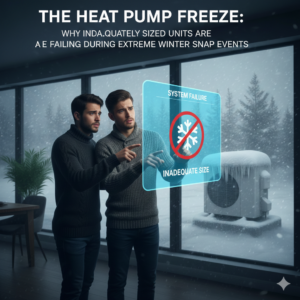
The Heat Pump Freeze: Why Inadequately Sized Units Are Failing During Extreme Winter Snap Events
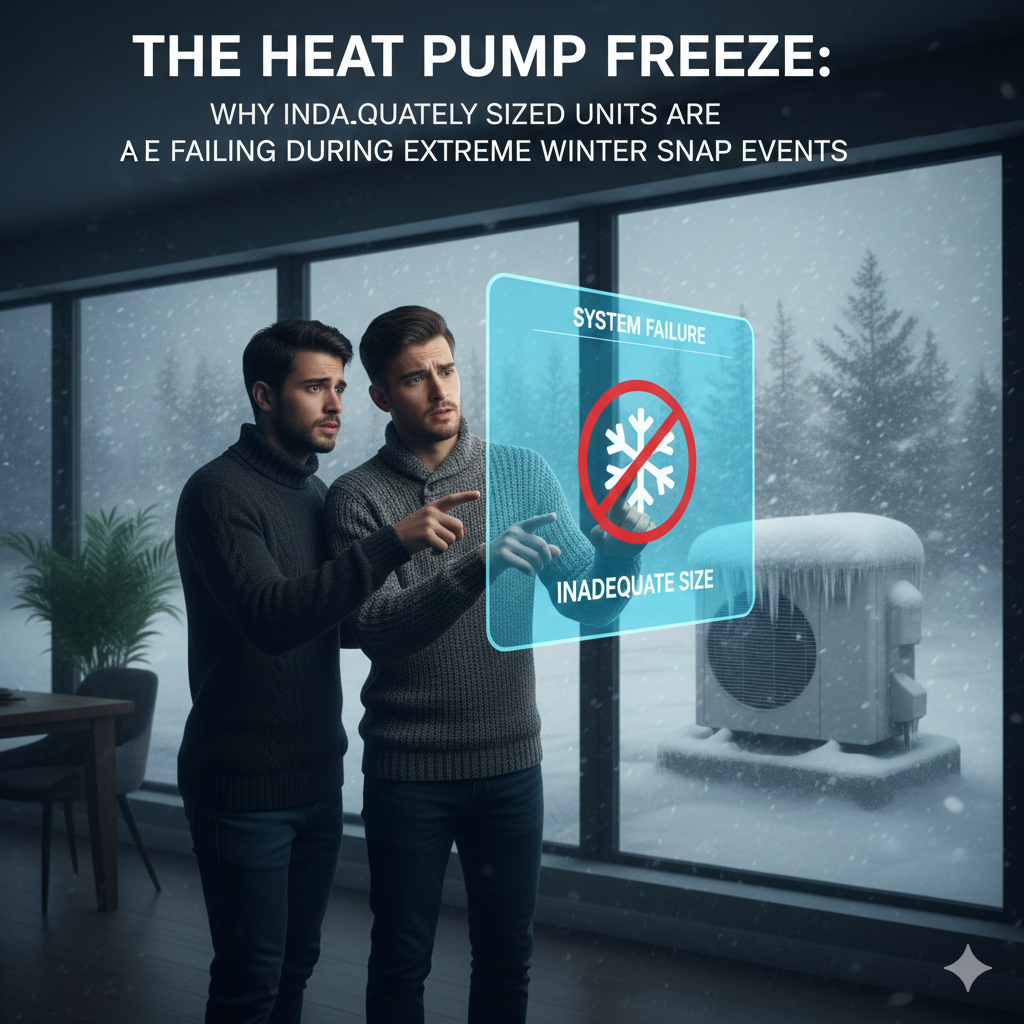
The Heat Pump Freeze: Why Inadequately Sized Units Are Failing During Extreme Winter Snap Events
Due to the fact that they combine heating and cooling functions into a single device, heat pumps have become more popular as an alternative to conventional heating systems that are more energy-efficient. A concerning pattern, on the other hand, is forming as a result of the fact that homes are experiencing system failures during harsh winter snaps. The capacity of many heat pumps to maintain temperatures inside buildings during periods of extreme cold is hindered by the fact that their sizes are not proportionate to the properties they serve. Units that function normally under typical circumstances may have difficulties when the temperature outside drops significantly, which may result in problems such as freezing, decreased efficiency, or even full shutdown. A growing number of homeowners are discovering that inadequately scaled heating systems are unable to meet the requirements of their homes, resulting in discomfort and an increasing dependence on other sources of heat. This pressure on the system may result in increased energy costs, premature wear, and expensive maintenance, which are all repercussions that transcend beyond the notion of convenience. The proper evaluation, installation, and sizing of the system are essential components in order to guarantee dependable functioning in the face of severe weather. It is necessary for both new installations and replacement planning to have a solid understanding of the limits that heat pumps face throughout the cold months.
Calculating the Size of a Heat Pump
Some of the criteria that influence the capacity of a heat pump include the size of the property, the amount of insulation, the height of the ceiling, and the climatic zone. In order to meet the energy requirements of the house, contractors determine the necessary heating and cooling load via calculations. During peak circumstances, undersized units provide an insufficient amount of power, while larger units may cycle too often, resulting in a reduction in efficiency. For the purpose of preventing underperformance during periods of harsh weather, accurate fitting is essential. In many cases, homeowners fail to recognize the significance of expert load estimates and instead depend on generic advice. Accurate sizing guarantees a constant level of indoor comfort and the life of the system. Having an awareness of this procedure helps avoid problems during installation as well as failures throughout the winter.
Why Extreme Cold Presents Difficulties for Heat Pumps
Heat pumps are dependent on the air around them in order to extract heat, and as the temperature outside drops, their effectiveness gradually diminishes. It is possible for even a properly sized unit to suffer during strong winter snaps if the circumstances surpass the limitations that were designed for it. Inadequately sized systems are more susceptible to failure because they are unable to handle the extra load that is necessary to keep the temperature stable. When it comes to outside coils, frost accumulation and freezing might take place, which can result in defrost cycles and further decrease output. When the cold weather lasts for an extended period of time, homeowners may experience temperature fluctuations or complete system shutdowns. Having a reasonable expectation of the functioning of a heat pump requires first and foremost an understanding of the environmental restrictions.
Symptoms That Your Heat Pump Is Not Large Enough
A number of indications point to the possibility that a heat pump is not of an appropriate size. There is a possibility that rooms could seem persistently cooler than anticipated, particularly on the coldest days. It is possible for the system to operate constantly without reaching the desired temperatures. As a result of longer working durations, the rate of energy bills may increase. Other warning signs include the presence of ice or frost on exterior coils throughout the winter. When supplementary heating equipment are activated often, it is an indication that there is inadequate capacity. Because homeowners are able to recognize these signals at an early stage, they are able to take remedial action before severe weather causes damage or suffering.
Certain Considerations Regarding Installation and Maintenance
The effectiveness of a heat pump is directly proportional to the quality of its installation. The ductwork, airflow, and refrigerant levels must all conform to the standards provided by the manufacturer. Deterioration of performance may be avoided by performing routine maintenance, which includes cleaning the coils, replacing the filters, and checking the system. If the installation is not done properly or if maintenance is ignored, even a unit that is the right size may not work as expected. In order to have a dependable operation during periods of severe cold, it is necessary to have professional inspections and periodic service performed. Taking preventative steps helps to avoid expensive failures and increases the life of the system.
Cost-Effectiveness and Energy Efficiency Implications
Due to the fact that they have difficulty maintaining temperature, heat pumps that are undersized spend more energy, which ultimately results in higher electricity costs. Homeowners could be compelled to make use of booster heaters, which would result in an even greater increase in energy usage. Putting pressure on the system over time causes it to wear out more quickly and may shorten its lifetime. A reduction in operating expenses and the prevention of financial losses caused by premature repairs or replacement may be achieved by making an initial investment in units of the appropriate size. When energy and economic considerations are taken into consideration, the need of accurate sizing and planning becomes more apparent.
Options for Homeowners to Consider
There are a few different options available to homeowners who are facing problems with their heat pumps. The most effective and long-term solution is to upgrade to a unit that is the appropriate size based on the load calculations performed by an expert. When harsh weather conditions occur, supplemental heating, such as electric baseboards or auxiliary units, might give some respite for a short period of time. Improvements to insulation and sealing air leaks minimize the need for heating, which in turn eases the pressure on systems that are already in place. Consulting with specialists in the HVAC industry guarantees that suitable solutions are matched to the characteristics of the property and the environment. Both comfort and investment in real estate may be safeguarded via proactive planning.
Planning for the Long-Term Utilization of Heat Pumps
For the purpose of selecting and installing a heat pump, it is necessary to take into account both the existing and the upcoming weather conditions. When designing a system, it is important to take into account seasonal performance, climatic patterns, and the possibility of severe occurrences. When selecting units, homeowners should take into consideration features such as energy efficiency, durability, and serviceability. Reliable interior comfort may be ensured by using appropriate size and performing preventative maintenance in preparation for the harsh winter weather. The danger of failure is decreased, energy consumption is optimized, and property value is protected via the use of long-term planning. When it comes to preventing the heat pump freezing situation, knowledge and planning are essential components.